Everything you need to know about electric cars
Thinking about going electric and want to understand what it really means before you switch? This guide covers the essentials: what you gain, what changes in your habits, how the battery works, how to charge day to day and on trips, and how to maintain your car over time.
The advantages of an electric car
The first difference is felt within the first few metres: the electric motor delivers its power instantly, with no revving up and no gear changes. Unlike a combustion engine, which needs to “rev up” to reach its full output, electric torque is available right from a standstill. The result is a smooth, quiet, and comfortable drive, whether in town or on the motorway.
This mechanical simplicity also shows up in your wallet. An electric motor has far fewer moving parts than a combustion engine: no oil changes, no spark plugs, no timing belt to keep an eye on. Fewer wear parts means less maintenance, and therefore a lower cost of ownership over time.
Energy itself is also cheaper to use. For everyday trips (around 90% of your mileage), home charging lets you drive for €2–3 per 100 km, compared with €10–12 per 100 km for an equivalent combustion car, roughly 4 times cheaper. Driving comfort, lighter maintenance, cheap energy: these three advantages add up and largely explain the growing appeal of electric cars.
The drawbacks of an electric car
These advantages come with a trade-off, mainly at the point of purchase. A new electric vehicle is generally more expensive than an equivalent combustion model, mainly because of the battery’s manufacturing cost, which makes up a significant share of the vehicle’s total price.
The used market is growing fast, though: increasingly affordable EVs appear every year.
The other constraint concerns long trips. Where refuelling with petrol takes a few minutes, fast charging requires a longer stop: expect a break roughly every 2 to 3 hours, lasting 20 to 30 minutes. This isn’t necessarily a downside if you change how you look at the break: rather than a constraint, it becomes a chance to grab lunch, have a coffee, or stretch your legs while the car charges. This is often called “background” charging — a different pace of travel, but not necessarily a less enjoyable one.
Understanding the battery
The battery is the heart of an electric vehicle, and it works on a fundamentally different logic to a fuel tank: its capacity is measured in kWh (kilowatt-hours), a unit of energy, not instantaneous power (kW). A 60 kWh battery can therefore deliver 60 kW for one hour, or 120 kW for 30 minutes.
Don’t mix them up: a 2 kW coffee machine running for 30 minutes consumes 1 kWh. Power (kW) describes an instantaneous rate, while energy (kWh) describes a cumulative amount.
This distinction has real consequences for everyday use. In winter, cold temperatures temporarily reduce available capacity and slow down fast charging — a normal phenomenon that doesn’t damage the battery and fades away once the temperature rises again.
To preserve the battery over the long run, it’s best to avoid extremes: aim for a 20–80% charge level when the vehicle stays parked for several days. Day to day, though, there’s no need to be that strict: you can charge to 100% before a trip planned within 1–2 days, or drop below 20% if a charge is coming up within the next few hours.
With an LFP chemistry, increasingly common, regularly charging to 100% poses no issue, even in the long term.
To go further on battery lifespan, the differences between NMC and LFP chemistries, and the best habits to adopt, our dedicated guide covers all of this in detail.
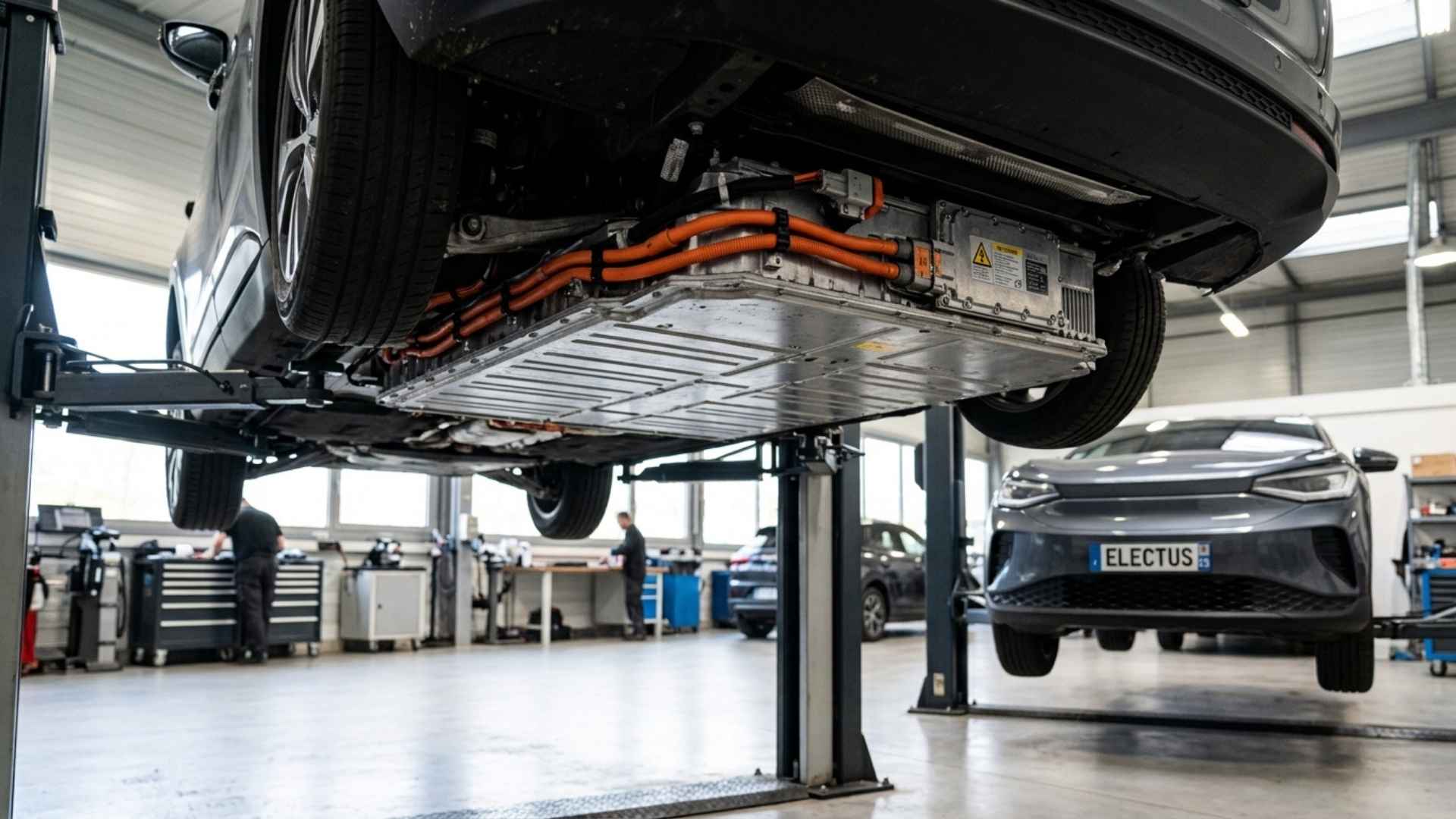 Car
CarUnderstand how EV battery capacity evolves over time and what impacts it.
Read the articleUnderstanding charging
Once you understand how the battery works, the next question is how to fill it up. There are three solutions, and they don’t replace one another: each one fits a different moment in your week.
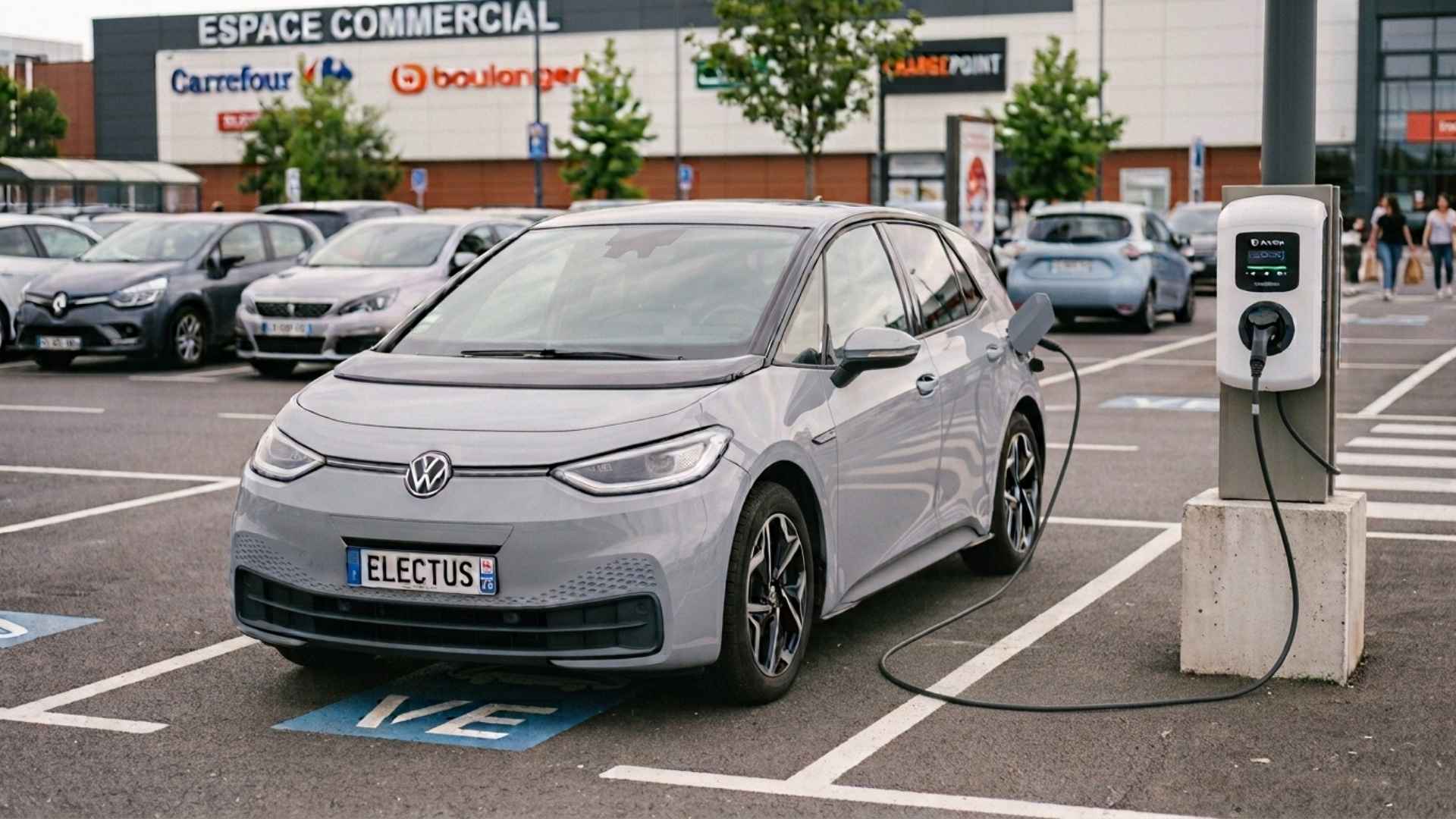
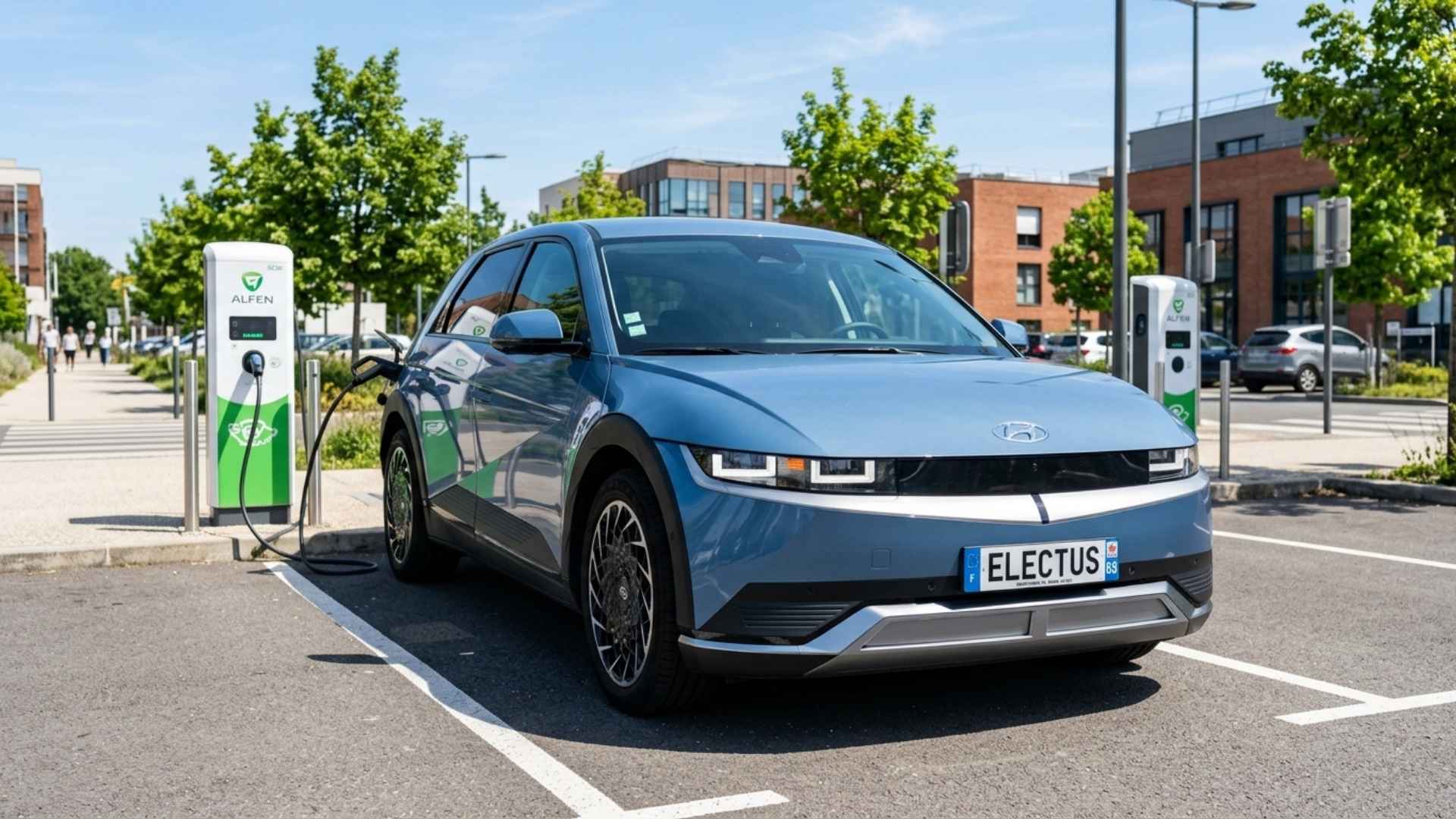
Most of your charging will likely happen at home, on a simple household outlet (up to 3.7 kW), while the car is parked overnight anyway. As a complement, whenever you park somewhere else for several hours (work, errands, a hotel), a public AC station, delivering between 7 and 22 kW of alternating current, lets you charge in the background, without even thinking about it.
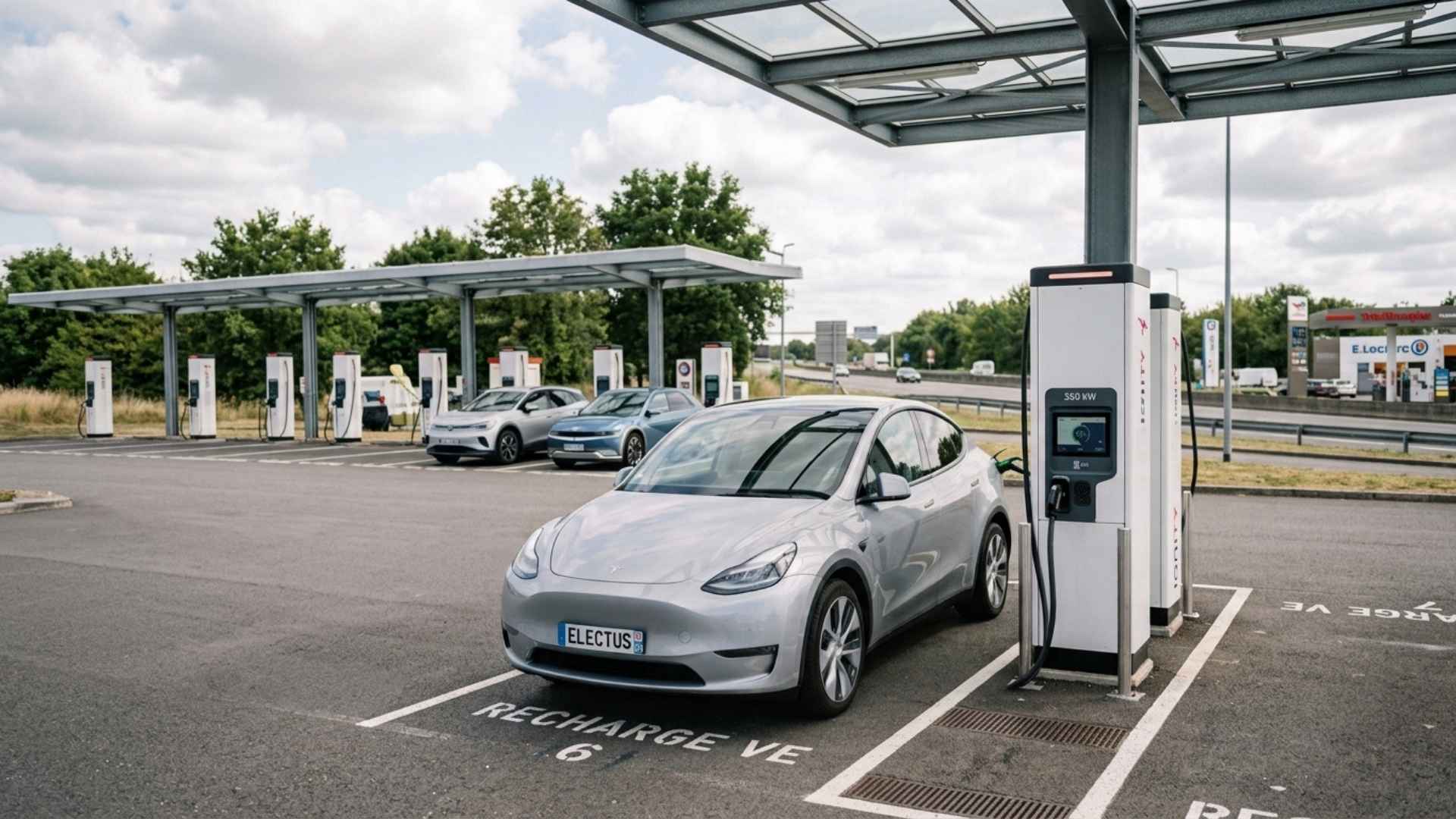
The fast (DC) station, on the other hand, only comes into play occasionally: on a trip, when you need to top up range quickly without leaving the car parked for hours. It delivers direct current (DC) straight to the battery, reaching 80% charge in around 20 to 30 minutes.
Beyond 80%, fast-charging power drops sharply: on a trip, it’s therefore more efficient to get back on the road at 80% rather than wait for a full charge.
Not every vehicle supports fast charging: check your car’s charging port to find out.

For a full breakdown of power levels, the cables to use for each solution, and exactly how a charging session unfolds, our dedicated article covers the whole topic.
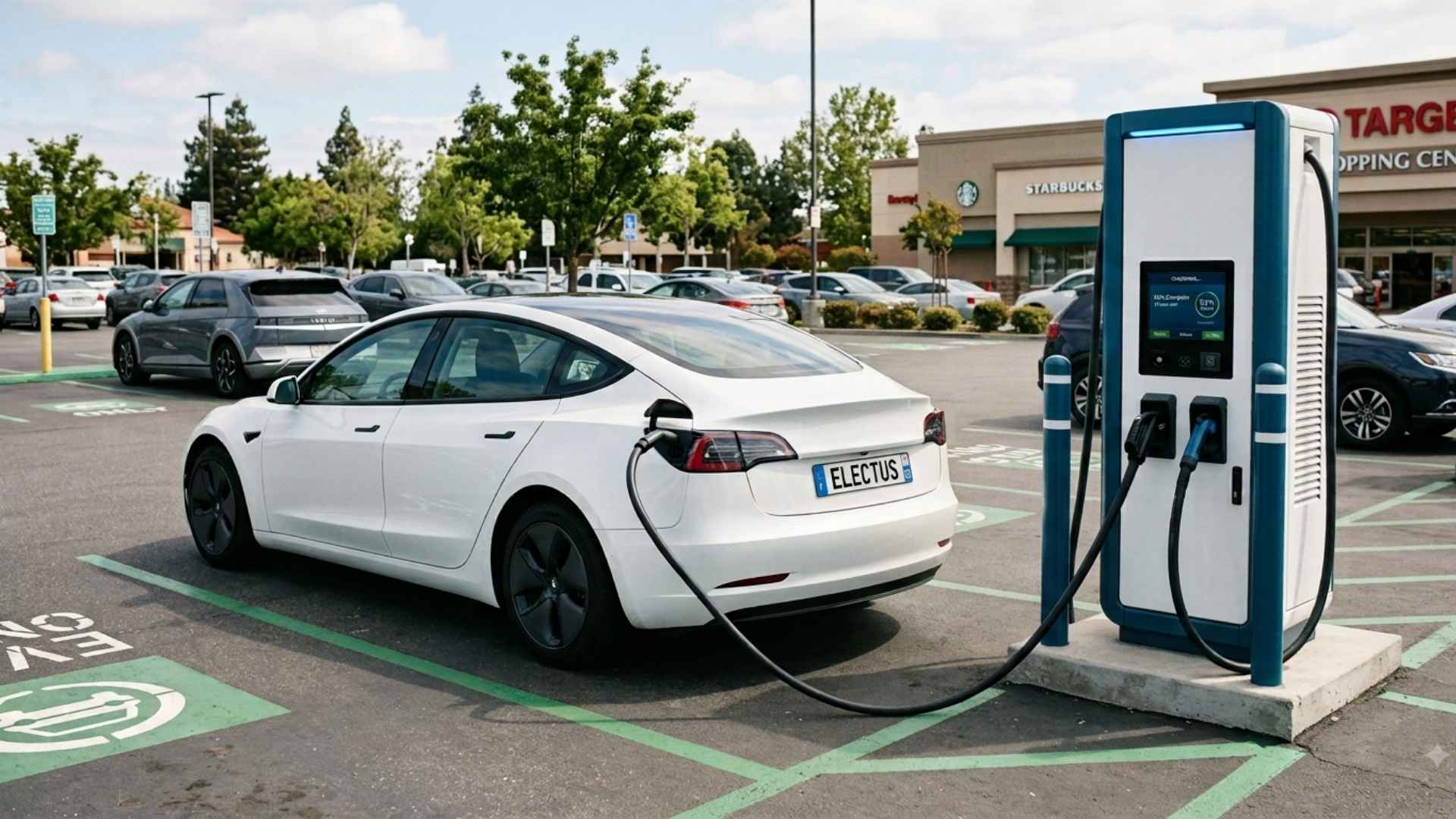 Charging
Everything you need to know about charging an EV at home or at public stations.
Read the articleTaking a long trip
This three-tier charging logic becomes especially useful on a long trip, where home charging, AC stations, and fast stations can all come into play depending on the stage of the journey. Travelling in an EV can feel complex to plan on your own, but with Electus, you have the tools to prepare for it with ease.
The first step before you leave: order your Electus badge. It lets you start a charging session on a wide range of public networks with a single badge, and get billed directly to your account, with no need to create a new account at every stop.
Next, let the Electus Route Planner take care of the rest. Enter your destination and your vehicle: the app builds a complete route with charging stops, an estimated arrival percentage, and the total trip cost. You can follow the same route from your phone, or display it on your car’s screen via Android Auto or Apple CarPlay.
Maintaining your electric car
The absence of a combustion engine also changes the maintenance picture. With no combustion, there’s no need for oil changes, a clutch, a timing belt, spark plugs, or a fuel filter: mechanical parts that simply don’t exist on an electric motor.
Regenerative braking amplifies this effect further. By using the electric motor to slow the car down and recover some of the braking energy, it significantly reduces the load on the mechanical brakes. In practice, brake pads and discs wear much more slowly, and generally last far longer between replacements than on a combustion vehicle.
Maintenance on an electric car isn’t zero, though: you’ll still need to keep an eye on the brake fluid, replace the cabin air filter, check the windscreen washer fluid level, and check the coolant, which plays a key role in regulating the temperature of the battery and power electronics. These are still simpler and less frequent tasks, though, which explains why annual maintenance costs are significantly lower than for an equivalent combustion vehicle.
In summary
From start to finish, an electric car changes how you do things rather than complicating them: driving becomes more immediately comfortable, maintenance gets mechanically simpler, and everyday costs drop noticeably. The one real adjustment concerns the pace of long trips, where charging becomes part of the journey rather than an interruption to it.
With Electus, you have all the tools you need to get started and drive with peace of mind, whether it’s choosing your home charging equipment, planning a long trip, or keeping an eye on your battery’s health over time.