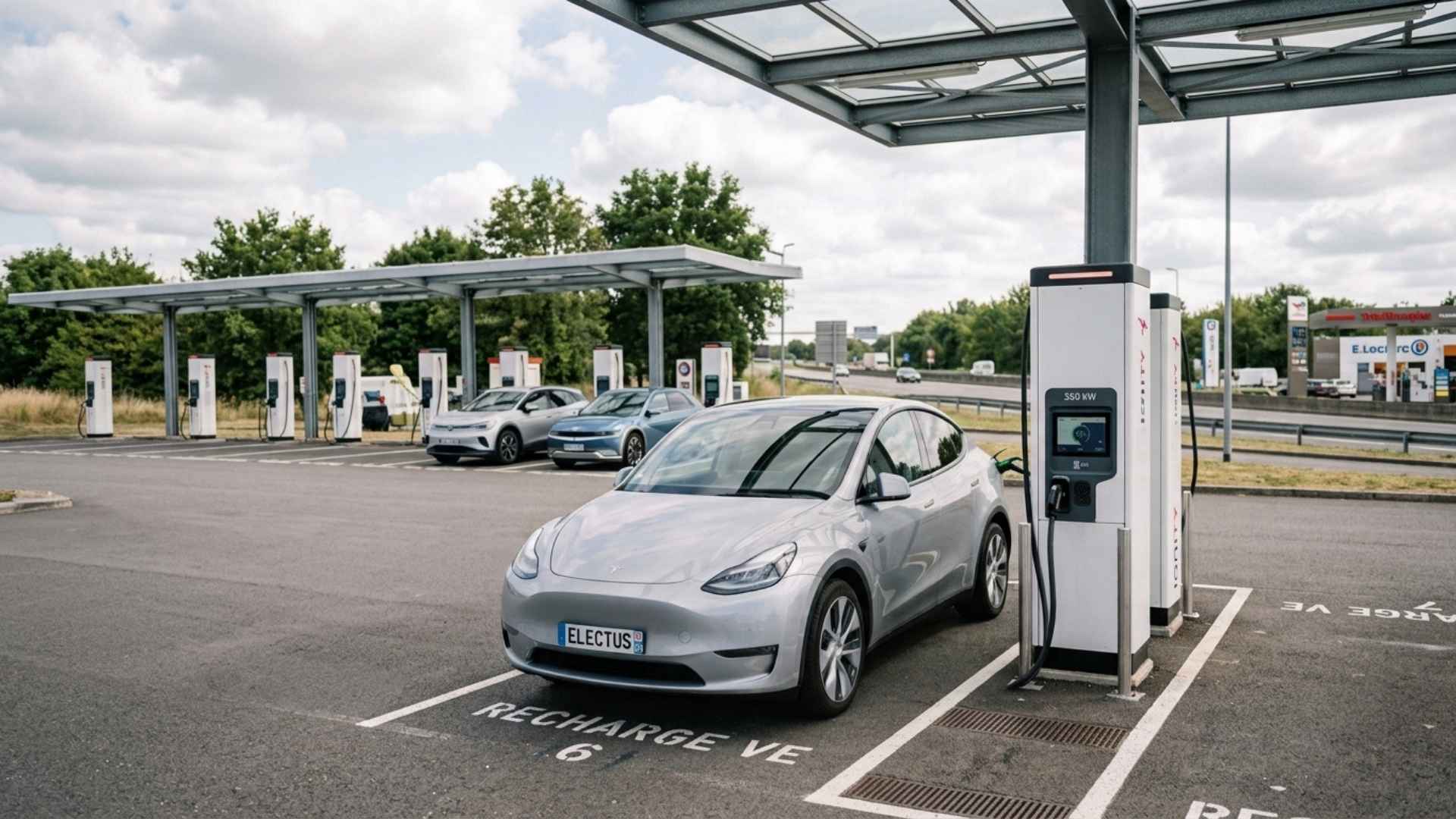
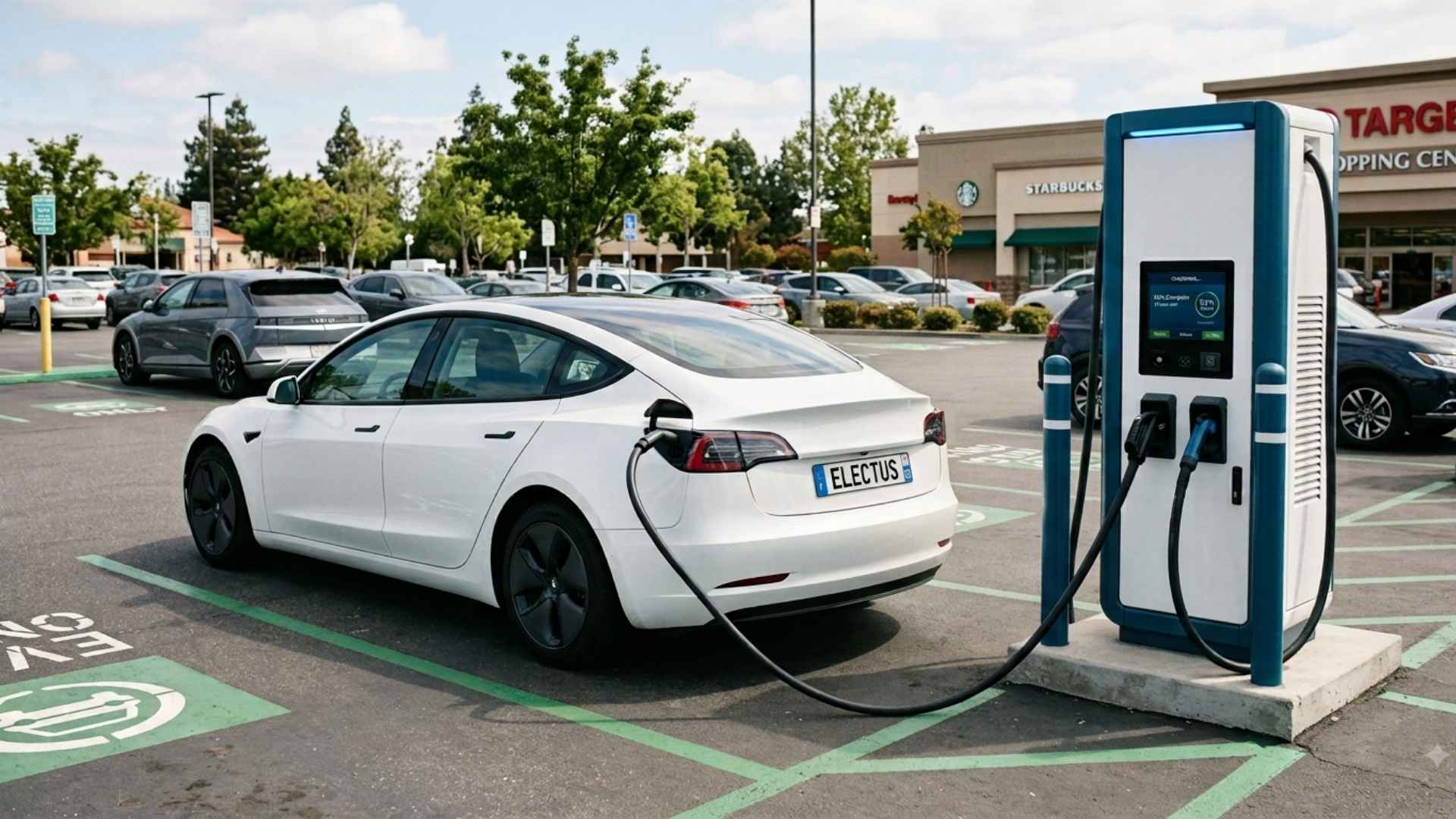
A rapid charging station lets you recover a large amount of energy without leaving your car plugged in for hours.
It’s mainly used:
- During a long trip
- Between two appointments
- When no home charging is available
- When you need to get back on the road quickly
Unlike fast charging stations, rapid charging stations use direct current. Electricity is sent straight to the battery without being limited by the onboard charger used for alternating current charging.
Under good conditions, charging time on a rapid station is generally between 20 and 30 minutes for a charge from 10 to 80%.
What’s the difference between a rapid and a fast charging station?
A fast charging station uses alternating current (AC) and often requires your own Type 2 cable.
It sends current to your car’s onboard charger, which converts it to direct current (DC) to charge the battery.
A rapid charging station uses direct current (DC) and has a cable directly attached to the station.
The station feeds your car’s battery directly, bypassing the onboard charger.
To go over every detail related to charging, AC and DC included, our complete guide answers all your questions:
 Charging
Standard plug, wallbox or public charger? Everything about charging an electric vehicle: charging time, cost and practical tips.
Read the articleWhich connector should you use?
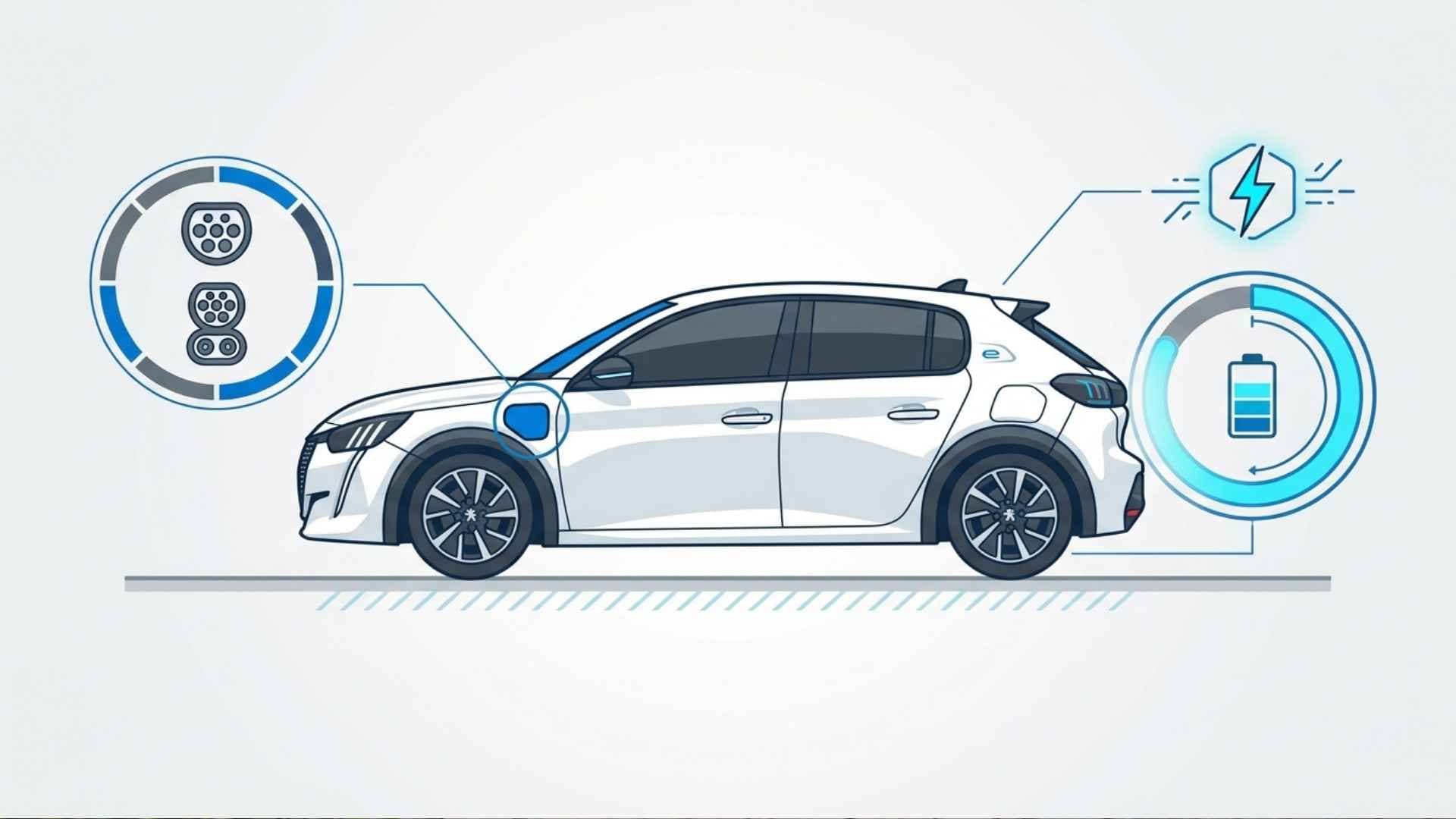
Most recent electric vehicles sold in Europe use a Combo CCS 2 connector for rapid charging.
Some older vehicles from Japanese brands still use a CHAdeMO connector.
There are also vehicles equipped only with a Type 2 connector, mostly entry-level models. They can’t take advantage of rapid charging.
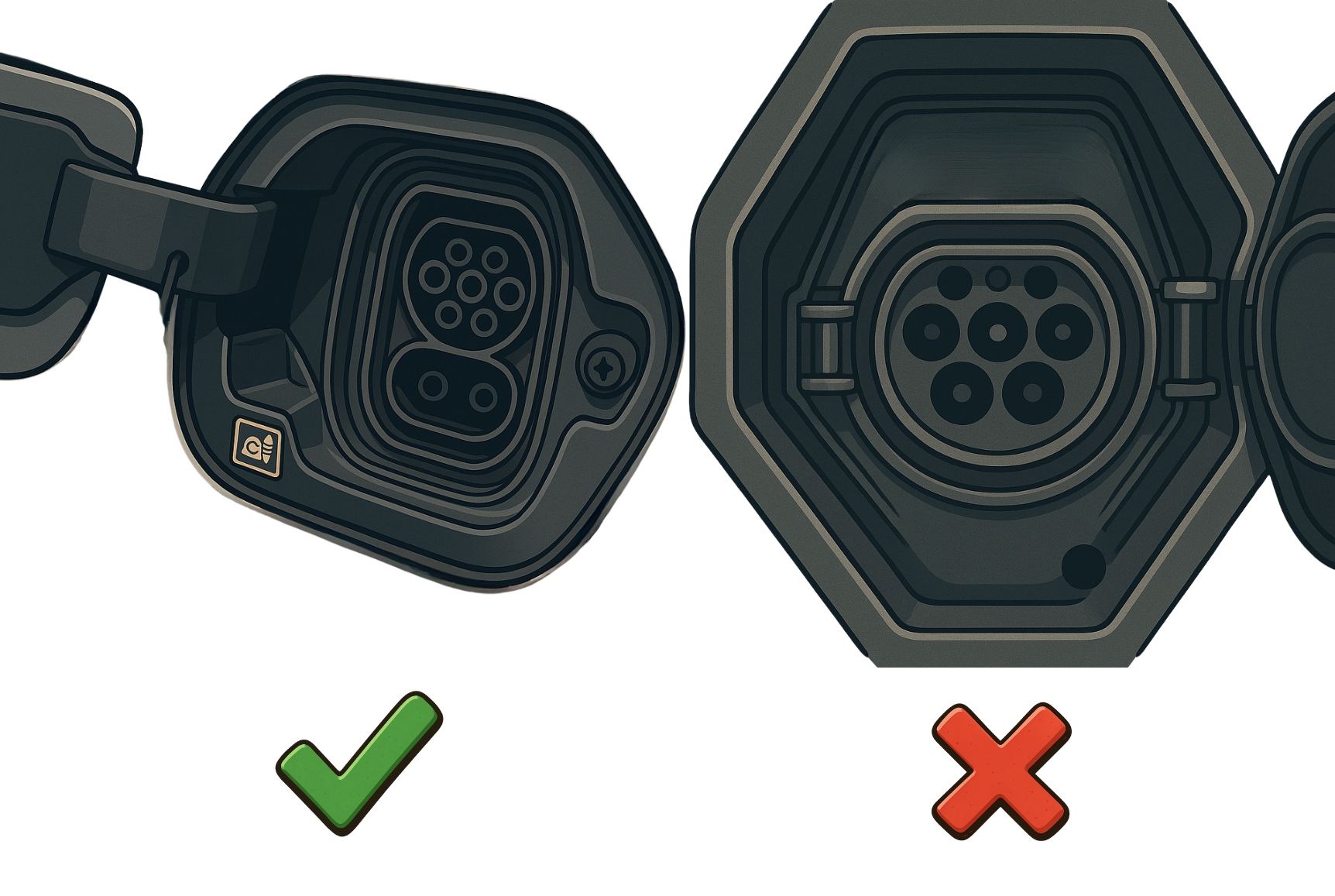
Before heading to a station, check that your car is compatible with the available connector.
The upper part of the CCS connector has the same shape as a Type 2 connector. Two additional contacts located below it enable rapid DC charging.
How do you start charging?
The method for starting a charging session at a rapid station is generally the same, though it can vary depending on the equipment used.
Start by taking your Electus badge and tapping it on the station’s reader.
If you don’t have an Electus badge, it’s recommended to order one before heading out.
If the station offers the option, select which connector to use, then tap your Electus badge on the station.
Plug in your vehicle and wait for charging to begin.
Once it starts, you’re free to do something else while your car charges. You’ll be able to track the charging session in the Electus app.
How do you stop charging?
The stopping procedure depends on the equipment used.
Some stations will ask you to tap your Electus badge to end the session, while others simply require pressing “stop”.
Once your session is over, properly stow the charging cable back on the station and free up the spot for other users.
Why might charging be slower than expected?
The power announced by the station corresponds to its maximum output. This power can be split between the number of vehicles using the station or its charging points.
Your vehicle is also a limiting factor, depending on the maximum power it can accept, battery temperature, and the battery’s current charge level.
Charging is faster when the charge level is low, and slows down significantly past 80%.
Some cars can also pre-heat their battery when a rapid charging station is selected in their navigation system. This feature, called preconditioning, can improve charging speed in cold weather.
Why does charging slow down after 80%?
A battery doesn’t charge at the same speed throughout the whole session.
Power is generally high when the battery level is low, then gradually decreases as the battery fills up.
This reduction mainly helps protect the cells and limit heat buildup.
On a trip, it’s therefore often faster to leave around 80% and plan another stop later on.
Depending on the car and conditions, going from 80% to 100% can take almost as long as going from 20% to 80%.
How do you choose a rapid charging station?
You can locate a rapid charging station using the Electus app:
You’ll be able to check the following information about each station:
- Its power output
- The number of connectors
- Its availability
- Its pricing
- Any access restrictions
- Available photos and information
With this information and your Electus badge in hand, you can hit the road with confidence, whether for a long trip or a quick stop along the way.