Charging an electric car can be split into three main categories:
- Charging at home
- Charging at a public AC (accelerated) station
- Charging at a fast (DC) public station
Each one meets a different need depending on how much time you have and where you are: home charging for everyday use, AC stations as a complement during your outings, and fast charging whenever you need to top up range quickly.
Charging at home
Home charging is the most affordable and practical solution for everyday use. Plug in your car when you get home in the evening, and it’ll be ready to go the next morning. Depending on your daily mileage, several charging solutions are available.
A standard outlet lets you recover around 80 km of range (i.e. 14.4 kWh) using off-peak hours only, or 120 km overnight (i.e. 19.8 kWh). It’s the most affordable solution and works well for everyday use.
A reinforced outlet (Green’Up type) is a sturdier version of a standard outlet that charges faster. It’s the solution we recommend for 90% of users. Having it installed specifically for your vehicle removes any risk of electrical overheating.
Using off-peak hours, it lets you recover 180 km of range (i.e. 29.6 kWh), or 250 km overnight (i.e. 40.7 kWh).
You can install it yourself or call in an electrician. Kits are available with everything needed for the installation.
Your charging cable (the one with the household plug) needs to support 16A to deliver maximum power. This is usually indicated on the back of the control box, or on the display if it’s adjustable.
To charge your vehicle on a standard or reinforced outlet, you’ll need a portable charging cable, sometimes supplied with the vehicle.
A 7 kW or 11 kW home charging station is the most convenient solution, though more expensive. It usually comes with an attached cable, so you don’t need to keep a cable in the boot, and depending on the model it can also let you schedule charging or track your consumption.
Using off-peak hours, you can recover up to 350 km (at 7 kW, i.e. 56 kWh) or 550 km (at 11 kW, i.e. 88 kWh), and up to 480 km overnight (at 7 kW, i.e. 77 kWh) or 750 km (at 11 kW, i.e. 121 kWh).
A 7 kW station is recommended if your home has a single-phase supply. If you have a three-phase supply, an 11 kW station is preferable. Before making your choice, take a look at our guide on installing a home charging station.
If you’d like to equip your home, here are a few reliable, well-rated stations:
| Charging solution | Range recovered (10pm-6am / 8pm-7am) | kWh recovered (10pm-6am / 8pm-7am) |
|---|---|---|
| Standard outlet | 80 km / 120 km | 14.4 kWh / 19.8 kWh |
| Reinforced outlet | 180 km / 250 km | 29.6 kWh / 40.7 kWh |
| 7 kW station | 350 km / 550 km | 56 kWh / 77 kWh |
| 11 kW station | 480 km / 750 km | 88 kWh / 121 kWh |
To find out which solution best suits your needs, try our simulator (coming soon).
Charging at a public AC station
AC charging stations use alternating current (AC) and let you fully charge your car in 4 to 6 hours, depending on your vehicle’s onboard charger.
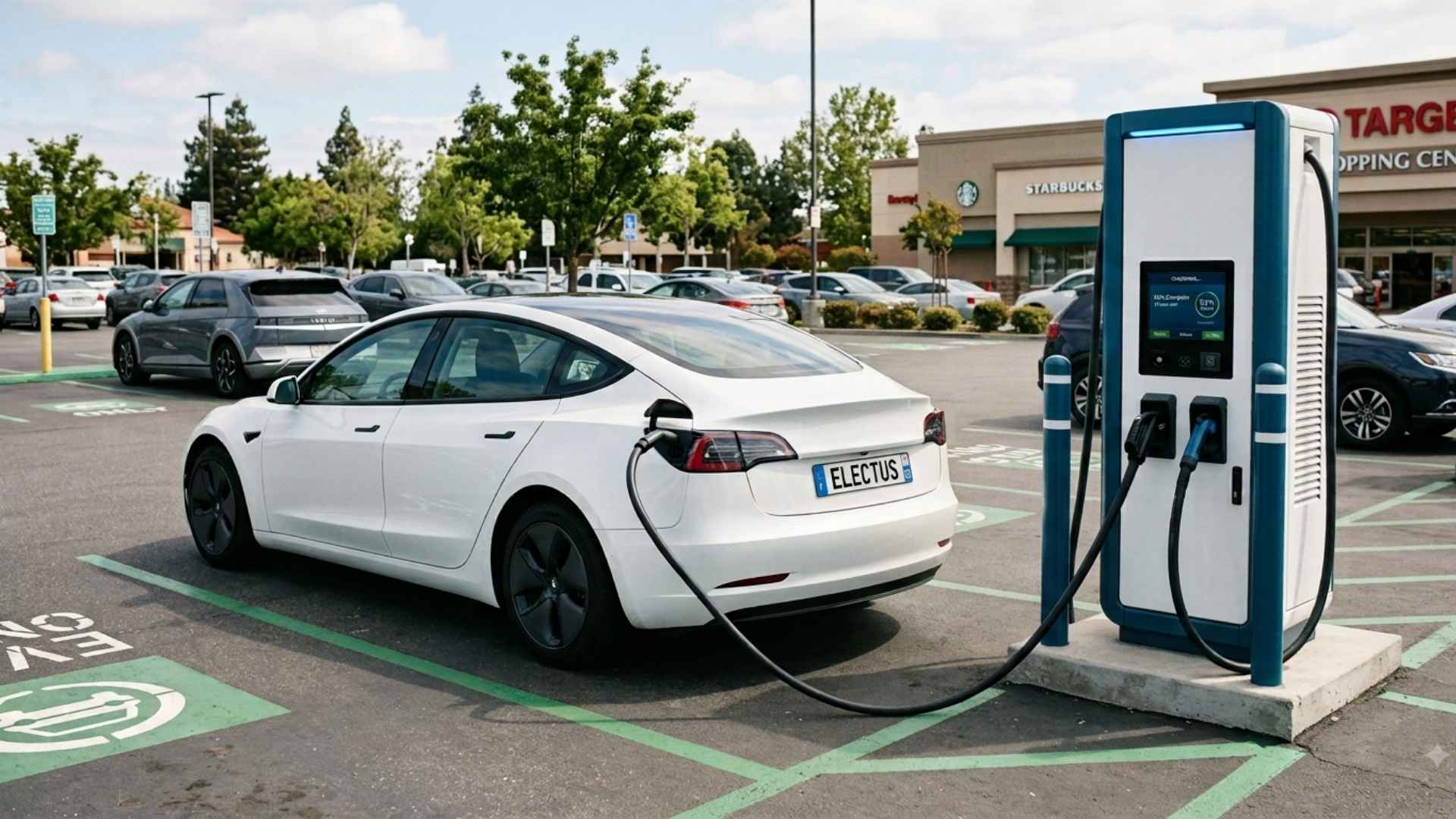
Example: a Tesla Model 3 has an 11 kW onboard AC charger. On a 22 kW station, the car will accept a maximum of 11 kW.
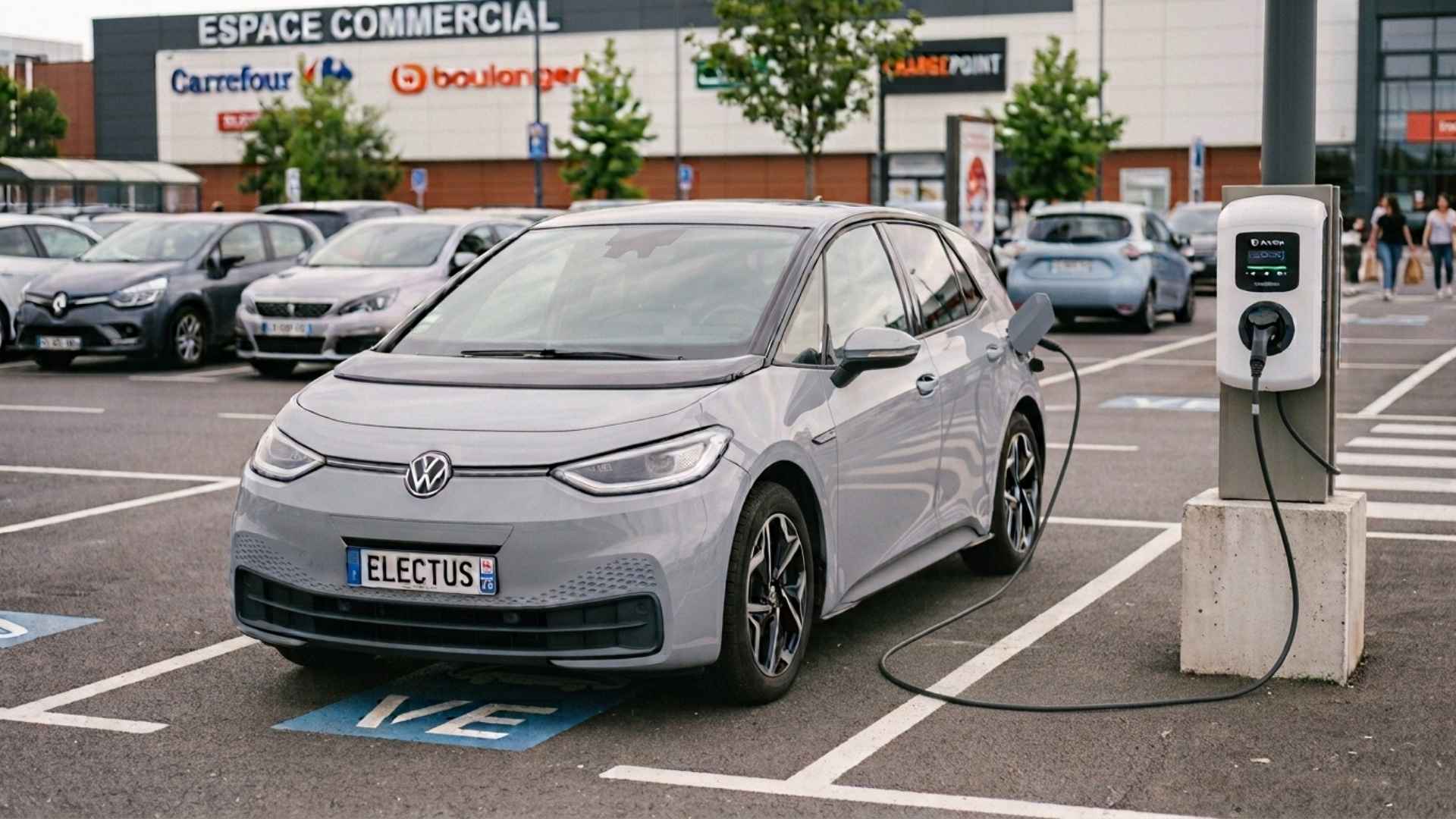
These stations are often found in station car parks, supermarkets, or public parking areas. They let you make the most of nearby time for charging in the background. This is especially useful if you don’t have a home charging solution and regularly park in the same spot during the day.
You’ll generally need to bring your own Type 2 to Type 2 cable (not to be confused with the “household outlet to Type 2” cable).
If your vehicle wasn’t supplied with a Type 2 to Type 2 cable, you can buy one. To avoid any limitation, go for a 22 kW-rated model:
To find an available AC station nearby and check its price before heading out, the Electus app brings together all the information you need.
To start a charging session, take your Electus badge and tap it on the station’s reader.
Stations with multiple connectors may require you to select the connector before tapping your badge.
Once authenticated, plug the cable into the station first, then into your car. If the station has a locking flap, make sure to close it to start the session.
Opening the car may occasionally interrupt charging. It should resume automatically.
Once your session is complete, tap your badge on the station. Once authenticated, the station will stop charging and unlock your cable.
Unplug the connector from the station first, then from your car. For stations with a locking flap, remember to close it again.
Don’t forget to free up the spot once you’re done charging!
 Charging
Learn how to charge at a public accelerated charging station, choose the right cable, start a session and control charging costs with Electus.
Read the articleCharging at a fast (DC) public station
Need to top up quickly? Fast stations let you charge from 10% to 80% in around 20-30 minutes. This is the go-to solution on a trip, or whenever you need to get back on the road quickly without leaving the car plugged in for hours.
These stations deliver direct current (DC), and the maximum power depends on both your vehicle and the station. You won’t need to bring a cable, as one is always attached to the station.
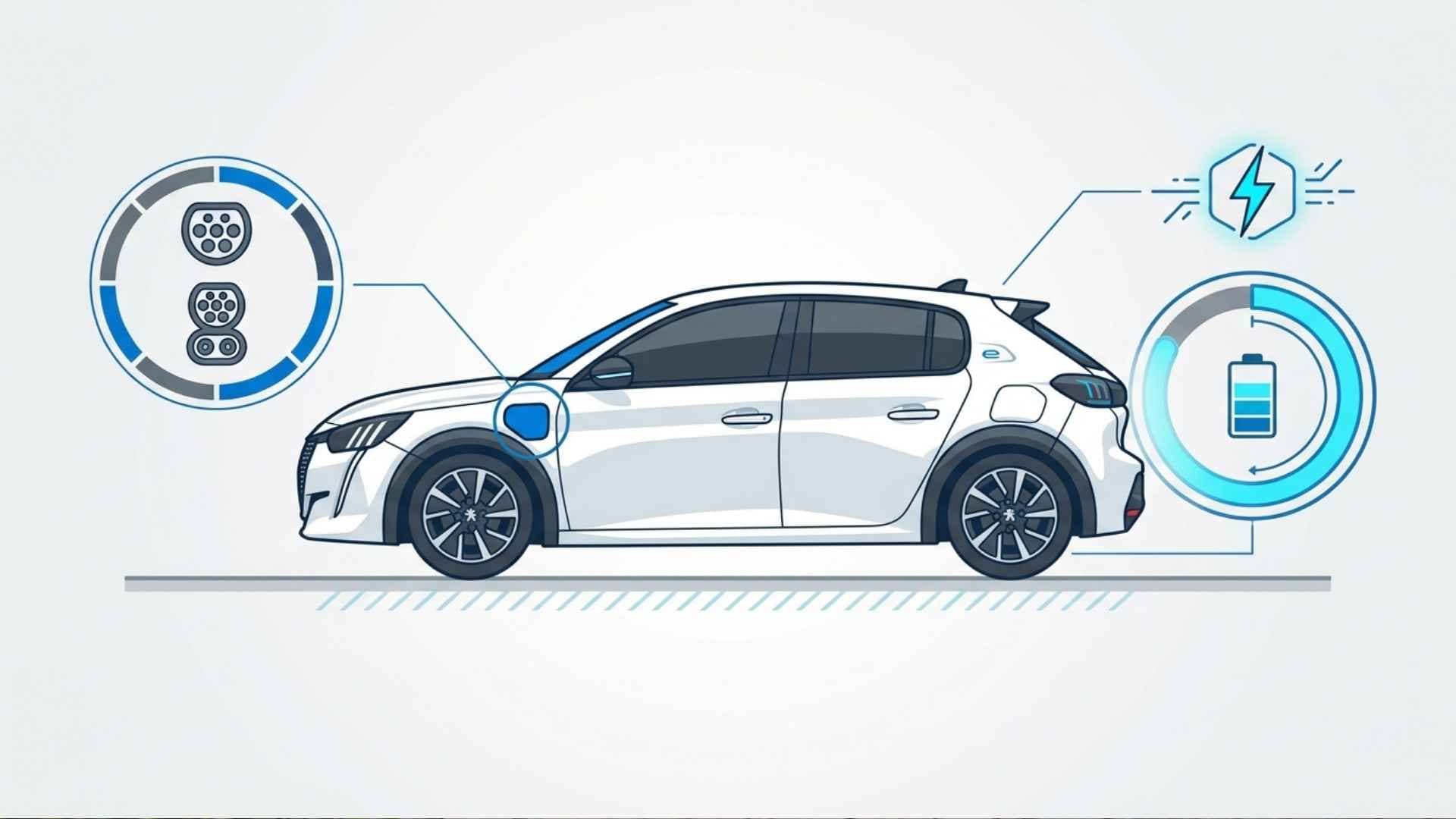
Some vehicles don’t support fast charging. To check, look at your charging port. You should have a connector like the one shown below.
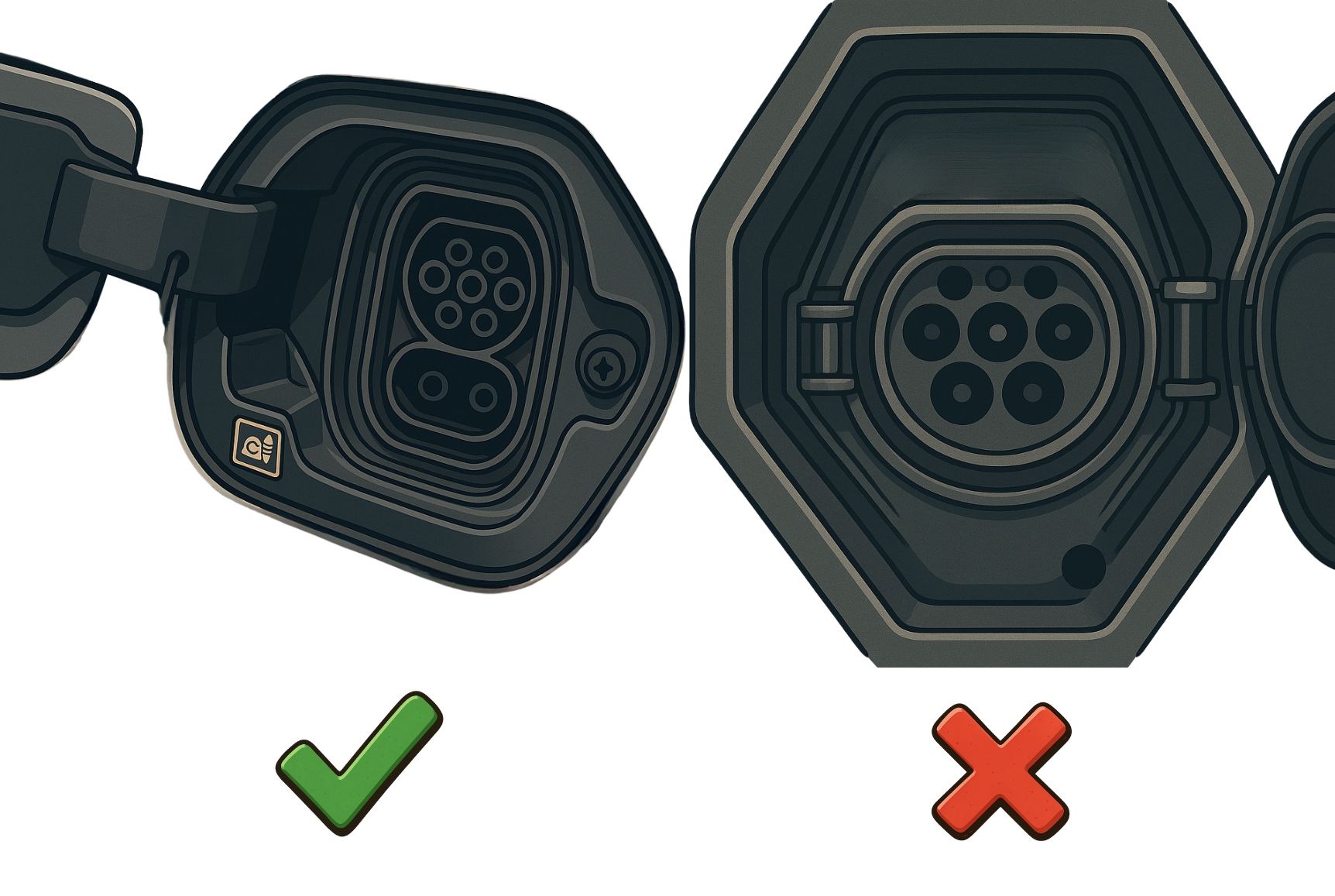
Unlike AC stations, fast stations deliver direct current (DC) straight to your battery, with no conversion needed.
Charging power therefore depends on your vehicle. To check your vehicle’s power rating, visit this page (coming soon)
Example: a Tesla Model 3 can accept 11 kW in AC and 170 kW in DC. On a 22 kW AC station, the car will accept a maximum of 11 kW, as the current is converted by the onboard charger before reaching the battery.
On a 350 kW DC station, the car will accept a maximum of 170 kW, as the current goes straight to the battery without conversion.
During fast charging, power is higher when the battery level is low. As the battery fills up, charging power gradually decreases. Beyond 80%, power drops sharply. If you’re travelling, unplug around 80% and continue your journey.
If the battery is cold, charging power may be temporarily limited. To avoid this, use battery preconditioning if your vehicle supports it. Contact your dealership to find out how to use it.
Before hitting the road, you can check available fast stations along your route directly from the Electus app, along with their power, connectors, and real-time availability.
To start a session at a fast station, take your Electus badge. Authenticate at the station (depending on the model, you may need to select the connector first).
Plug the cable into your car.
Charging will start, wait a few seconds.
Some stations have multiple cables: use the CCS one (see illustration below)
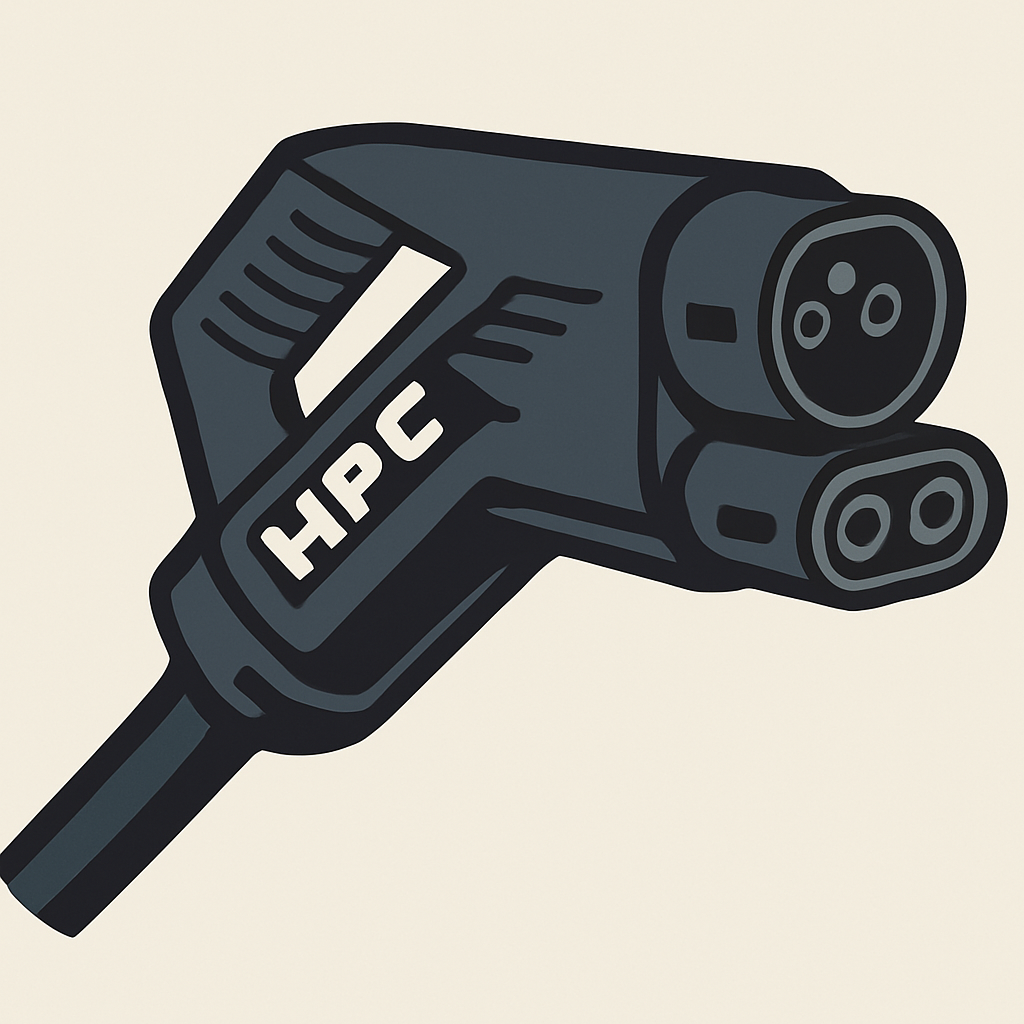
To stop charging, end the session and tap your badge (some stations don’t require this). Put the connector back in its holder.
Don’t forget to free up the spot once you’re done charging!
 Charging
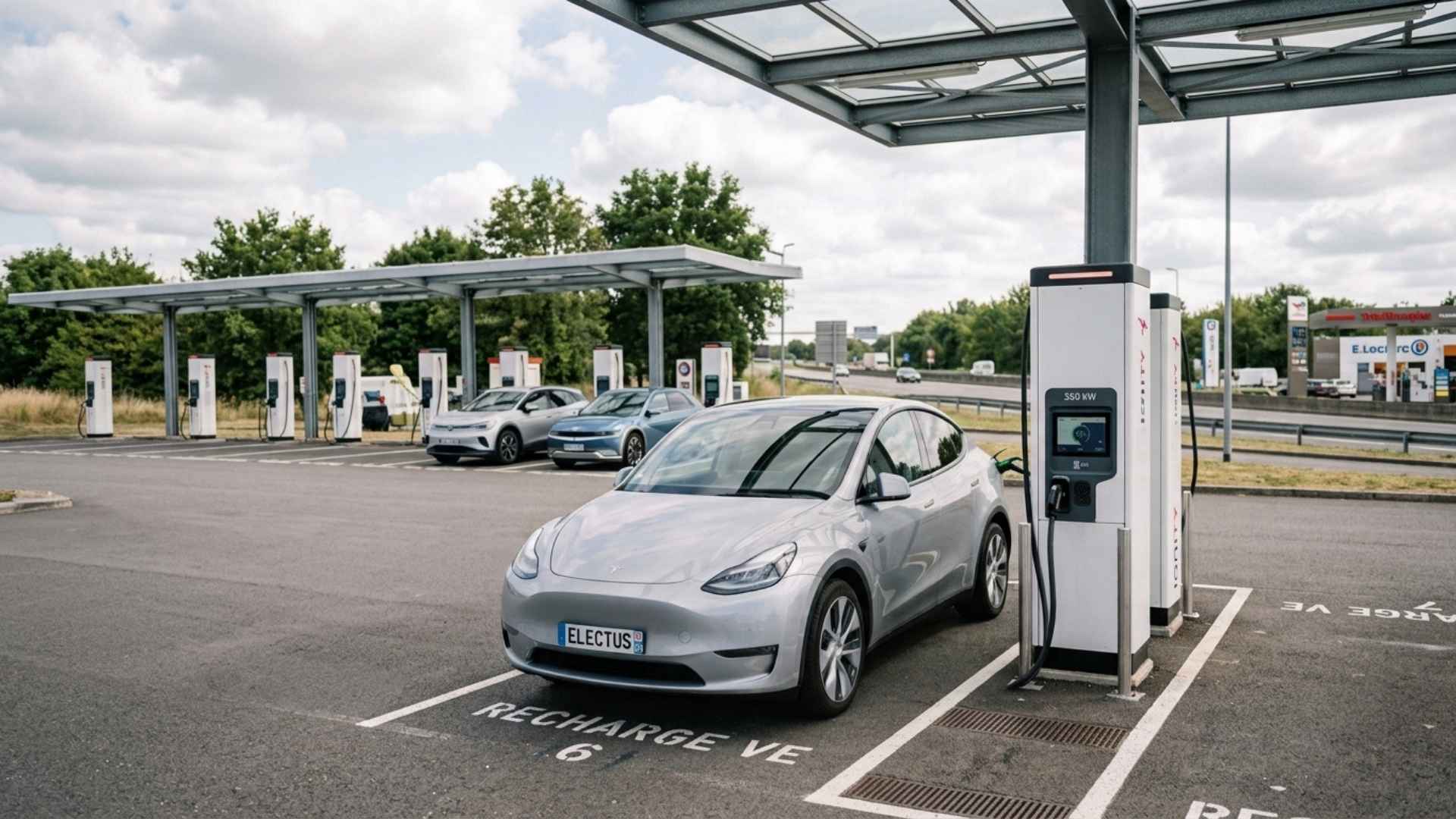
Learn how to use a rapid charging station, choose the right connector, start charging and understand why charging power decreases after 80%.
Read the articleIn summary
Whether you’re charging at home, at an AC station in town, or at a fast station on a trip, each solution has its place in your everyday life as an EV driver. The golden rule: favour home charging whenever possible, and rely on public stations as a complement, always keeping your Electus badge close at hand.
To equip your car or your home, here’s the essential kit to have on hand:
Finding a public charging station can be tricky. To make things easier, Electus has a station map that lets you locate and filter stations nearby based on power output and available connectors.