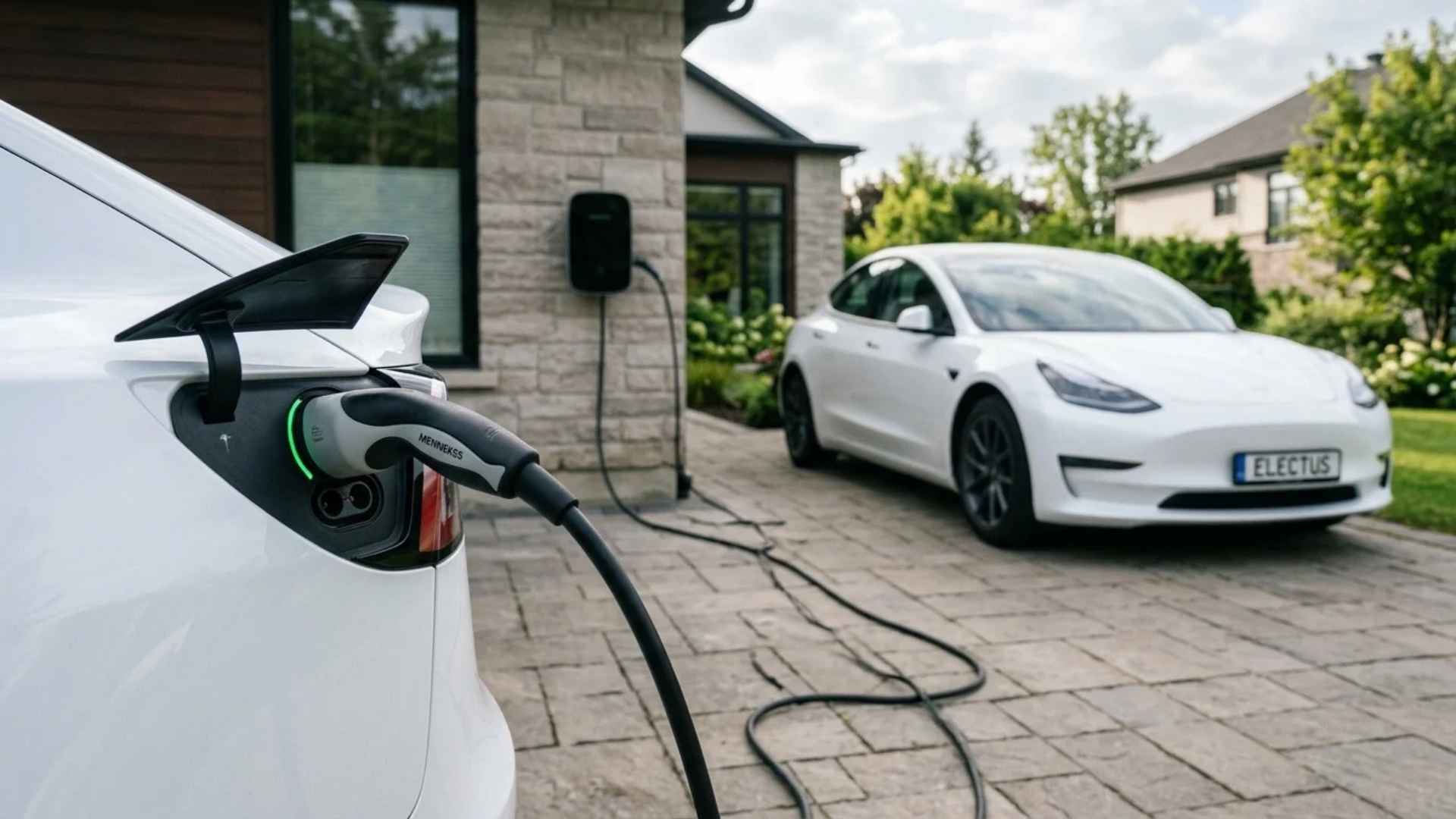
When you plug in an electric car, charging speed doesn’t depend on a single element but on three: the charger, the cable and the car. The weakest link always sets the power actually received. Understanding what limits each of them lets you know how fast you will charge and, above all, avoid unpleasant surprises.
AC or DC: who converts the current?
The power grid supplies alternating current (AC), while a battery can only store direct current (DC). Someone has to do the conversion, and that is what sets the two charging modes apart.
- In AC, the alternating current enters the car, which converts it using its onboard charger.
- In DC, the conversion is done by the charger itself: the current arrives already converted and goes straight into the battery, bypassing the onboard charger.
A converter built into a charging station can be far more powerful than the one in a car. This is why DC charging is the domain of fast chargers (above 22 kW), while AC covers slow (below 7 kW) and accelerated charging (roughly 7 to 22 kW).
This determines how each is used. AC suits situations where the car stays parked for a long time: at home, at work, in a car park, overnight. DC is for when you need to get back on the road quickly, typically on a long trip. What remains is to understand what really limits speed, starting with AC.
In AC, the car sets the limit
In AC, the power received is the lowest of three values: that of the charger, that of the cable and that of the car’s onboard charger. Plugging a car limited to 7 kW into a 22 kW charger won’t make it charge faster: it will stay at 7 kW.
The catch is that the onboard charger’s power is not the same for every model, and sometimes not even for every version of the same model. Some cars offer a more powerful charger as an option, for example 11 kW instead of 7 kW. Two cars that look identical can therefore charge at very different speeds on the same charger.
Here is the effect of this power on charging time, for a 50 kWh battery, from 0 to 100%, as a rough guide:
| Charging power | Approximate charging time |
|---|---|
| 2.3 kW (household socket) | 21 h 45 min |
| 7 kW | 7 h |
| 11 kW | 4 h 30 min |
| 22 kW | 2 h 15 min |
Real-world times are slightly longer, because some energy is lost during charging and the current drops at the end of the charge.
To go further on how AC chargers work, our dedicated guide explains how to use them.
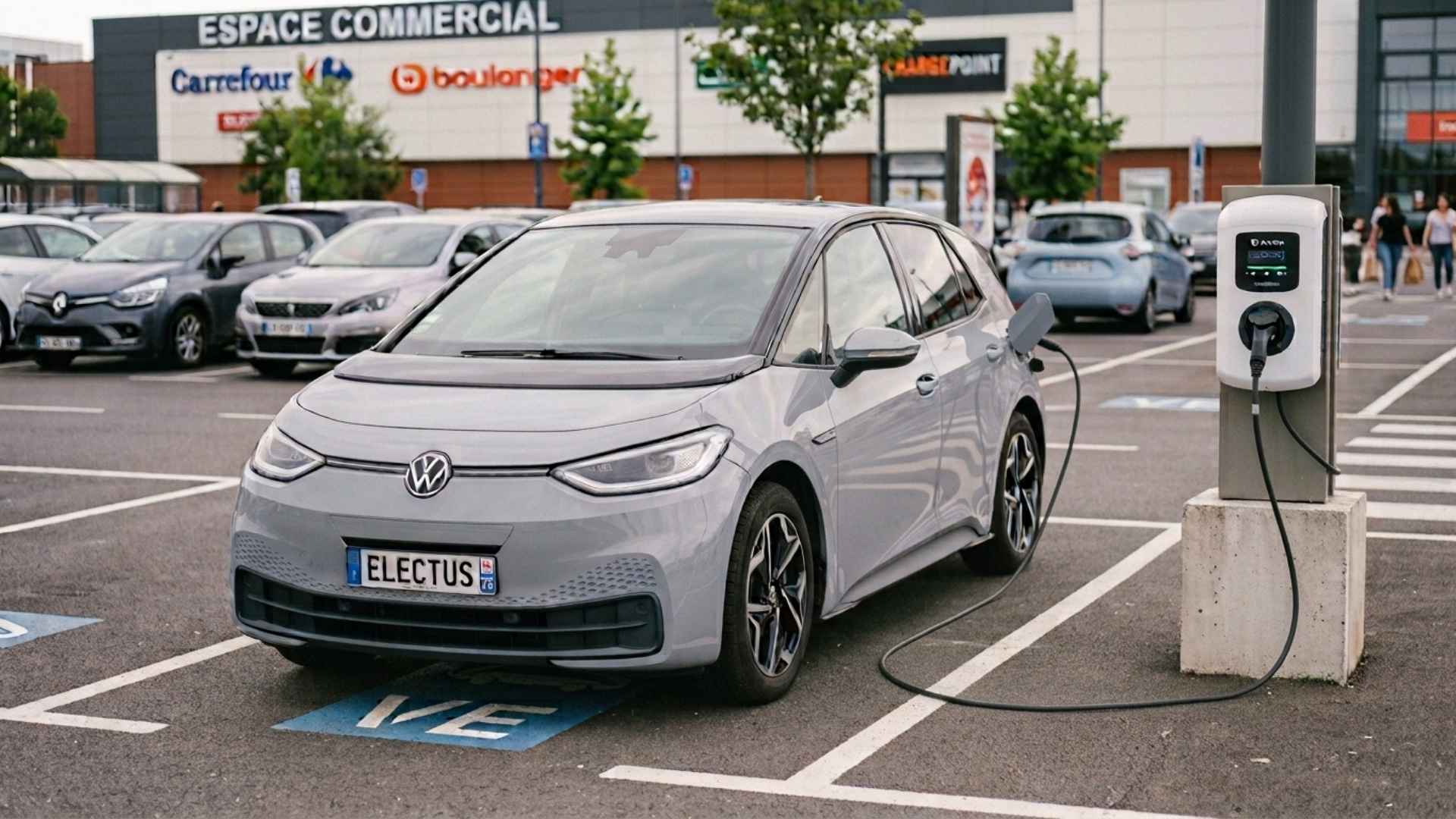 Charging
Learn how to charge at a public accelerated charging station, choose the right cable, start a session and control charging costs with Electus.
Read the articleIn DC, the rules change completely.
In DC, the charger advertises, the car decides
A fast charger displays a maximum power, for example 150 or 350 kW. But since the conversion happens in the charger, the limit is no longer the onboard charger: it is the car and its battery that set what they accept. They ask the charger for the power they can absorb.
An essential point follows: a car’s AC power and DC power are unrelated. A car limited to 7 kW in AC may well accept more than 100 kW in DC. Relying on one to guess the other leads to wrong conclusions.
The power received also varies during the charge: it is highest when the battery is empty, then gradually decreases to protect the cells, especially beyond 80%. Temperature matters too, since a cold battery accepts less power. Our guide on battery technology explains why, and the one on fast chargers shows how to get the most out of them.
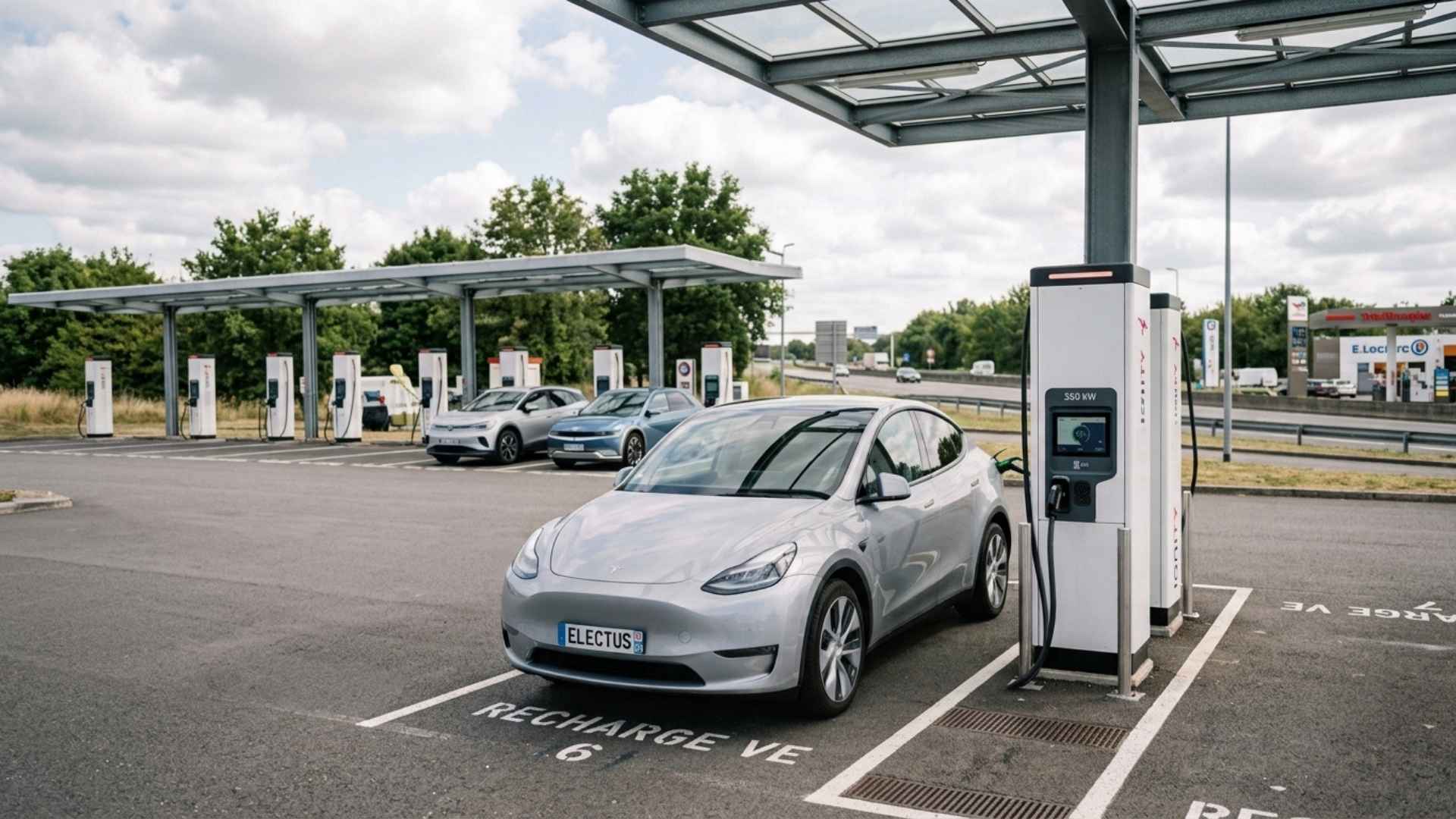 Charging
Learn how to use a rapid charging station, choose the right connector, start charging and understand why charging power decreases after 80%.
Read the article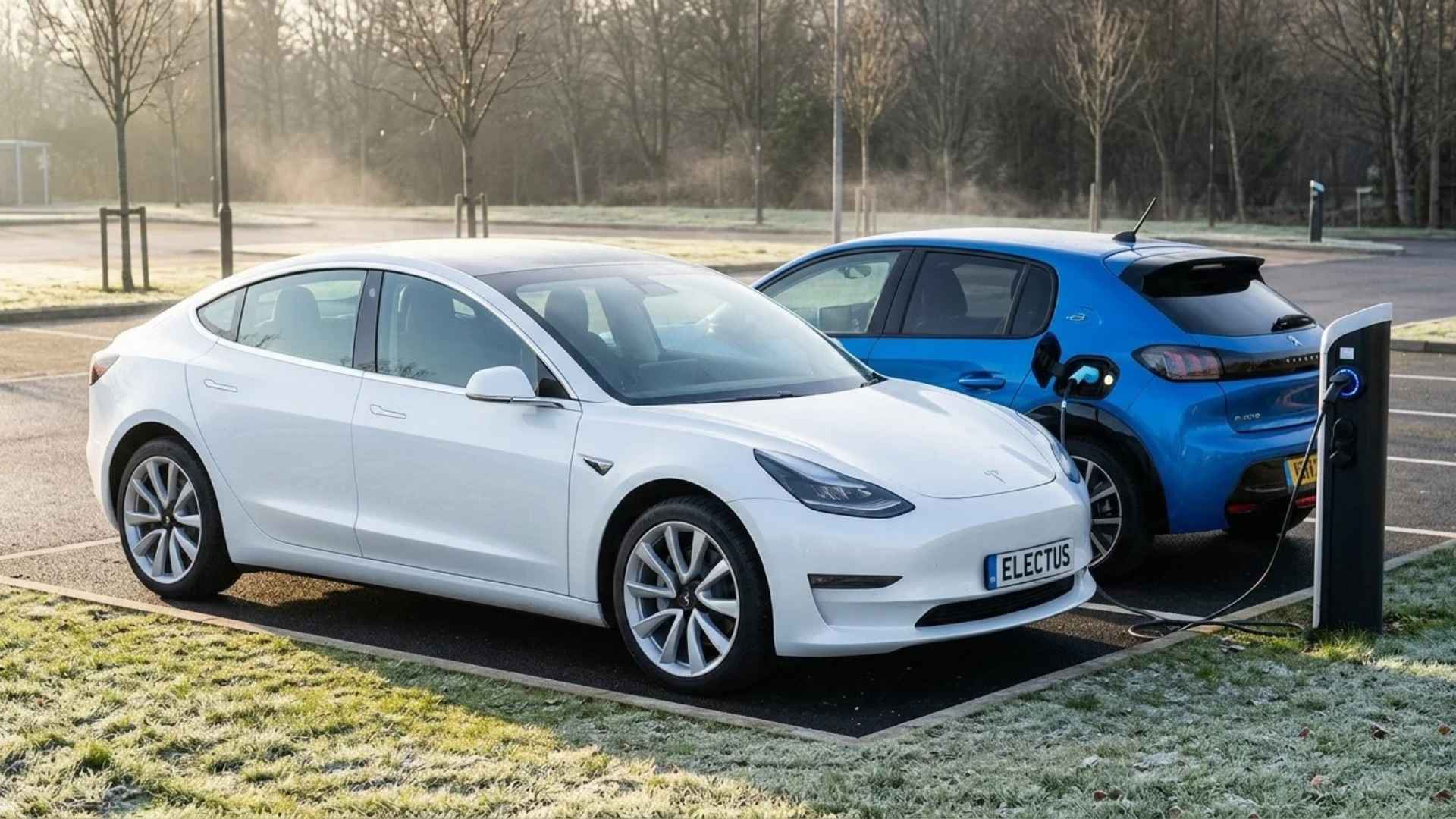 Car
LFP or NMC battery? Lifespan, range, cold, charging to 100% and price: compare both technologies and choose your electric car with confidence.
Read the articleOnce you understand power, one very practical detail remains: which cable do you plug in with?
Which charger comes with its own cable?
It all depends on the type of charger:
- Household socket: you use a CRO cable (occasional charging cable), often supplied with the car, which plugs into the home socket on one end and the car on the other.
- Home charger (wallbox) or public AC charger: it generally offers a T2 socket, and you need to bring your own cable. Some chargers have a tethered cable, but that is not the rule.
- DC fast charger: the cable is always attached to the charger, so there is nothing to bring.
This difference leads to another one: the type of cable to choose.
CRO or T2: what are they for?
The CRO, short for occasional charging cable, is designed for the household socket. Despite its name, it can perfectly well be used every day, for example to charge overnight. Its power remains low, around 2.3 kW, which makes charging slower.
The T2 is the cable for AC chargers, whether at home or public. It’s the one you keep in the boot to charge wherever you find an AC charger, with far more power than the CRO.
Our guide “Everything you need to know about charging an electric car” covers the different cables and sockets in detail.
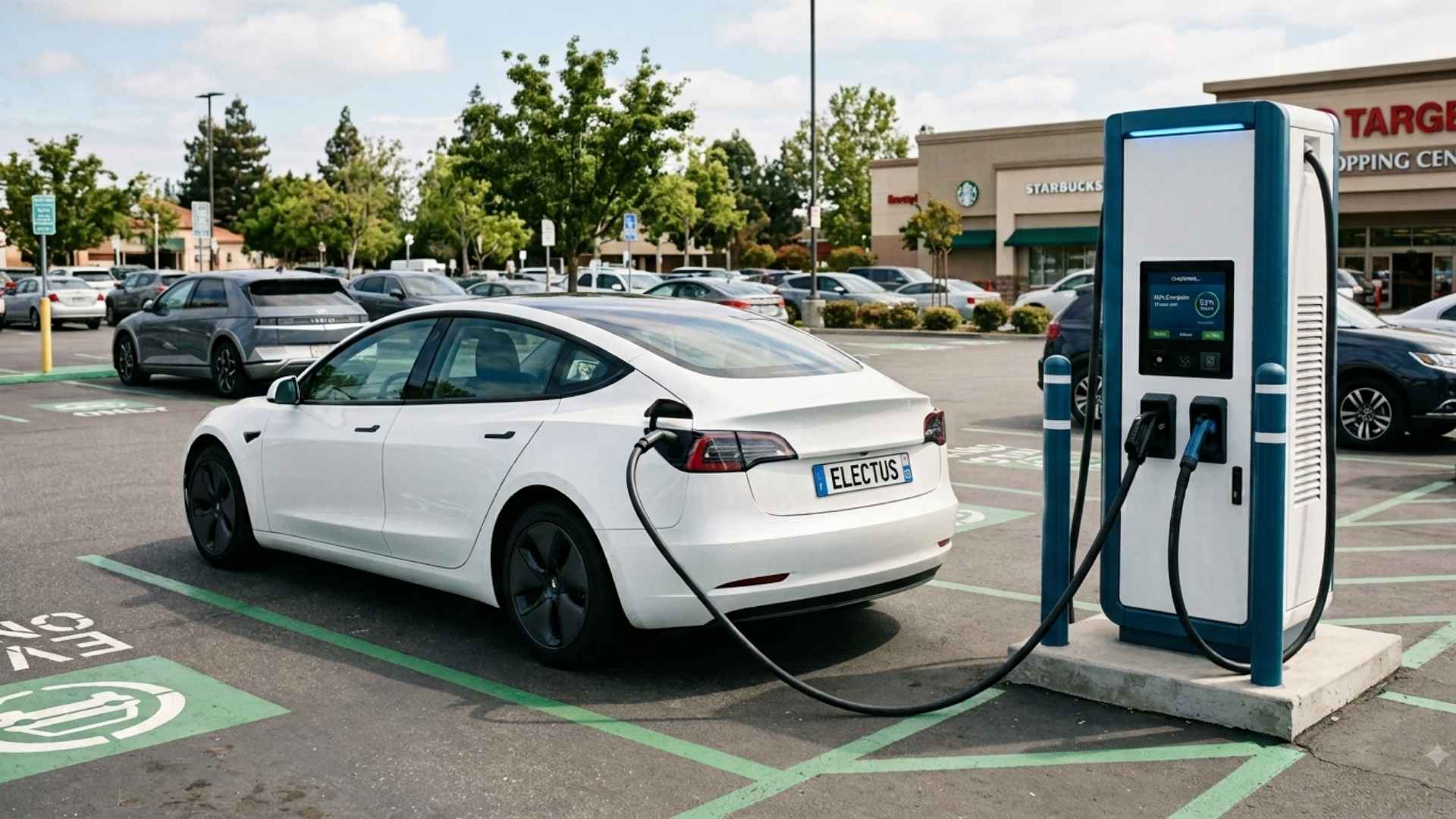 Charging
Standard plug, wallbox or public charger? Everything about charging an electric vehicle: charging time, cost and practical tips.
Read the articleWhat remains is choosing the power of this T2 cable.
7 kW or 22 kW cable: which one to choose?
A cable can only carry a limited amount of current. To understand the power levels, you need to distinguish two types of supply: single-phase, which uses one phase at 230 V, and three-phase, which uses three at 400 V and therefore carries more power. With the current (in amps), this gives:
| Supply | Current | Power |
|---|---|---|
| Single-phase | 16 A | 3.7 kW |
| Single-phase | 32 A | 7.4 kW |
| Three-phase | 16 A | 11 kW |
| Three-phase | 32 A | 22 kW |
A 7 kW cable (single-phase, 32 A) is enough if the car is limited to 7 kW in AC. It is generally lighter and more flexible.
A 22 kW cable (three-phase, 32 A) is more versatile. It works with a 7 kW car, but also with a car that accepts 11 or 22 kW on a three-phase charger. It is slightly heavier and stiffer, but it covers every situation.
To equip yourself, here is a CRO cable for the household socket and two T2 cables, in 7 kW and 22 kW:
Why avoid the 11 kW cable?
At first glance, the 11 kW cable looks like a good compromise. In reality, it is designed for 16 A. On a 7 kW charger or with a 7 kW car, which run on single-phase 32 A, it limits the current to 16 A: you drop to around 3.7 kW, which is half the power.
A 22 kW cable supports 32 A, so it never throttles a 7 kW charger or car. That is why it is preferred to an 11 kW cable, unless you are certain you will only charge with 11 kW chargers and an 11 kW car.
What remains is finding out what your own car can actually do.
How do you find out your car’s charging power?
Charging power isn’t always easy to find, and it varies by version. In the Electus app or on the site’s Cars page, each model’s page shows its AC and DC charging power. You then know which cable to take and how fast you can charge.
With this information in hand, you can choose your cable and your charger with confidence.
In short
- Charging speed depends on the weakest link: the charger, the cable or the car.
- In AC, the car converts the current through its onboard charger, whose power varies by model and options.
- In DC, the charger converts the current, and the car decides how much power it accepts.
- The CRO is for the household socket, the T2 for AC chargers, and DC chargers come with their own cable.
- Between 7 kW and 22 kW, the 22 kW is the most versatile, and the 11 kW is best avoided.
Mastering these notions means charging with more confidence and choosing the right cable the first time. Find the charging power of each model in Electus.