How to charge an electric car?
Charging an electric car is simpler than it looks. Depending on where you park, how much time you have, and the distance you need to cover, you can use different charging solutions.
There are mainly four situations:
- Charging at home
- Charging at a public AC (accelerated) station
- Charging at a fast (DC) station
- Charging on the motorway during a long trip
Each solution meets a different need. A standard outlet can be enough for short daily trips, while a fast charger is better suited to quickly topping up range during a journey. In most cases, drivers combine several of these solutions throughout the week: home charging for everyday use, and public or fast stations occasionally, for a longer trip or a day without access to an outlet.
Charging an electric car at home
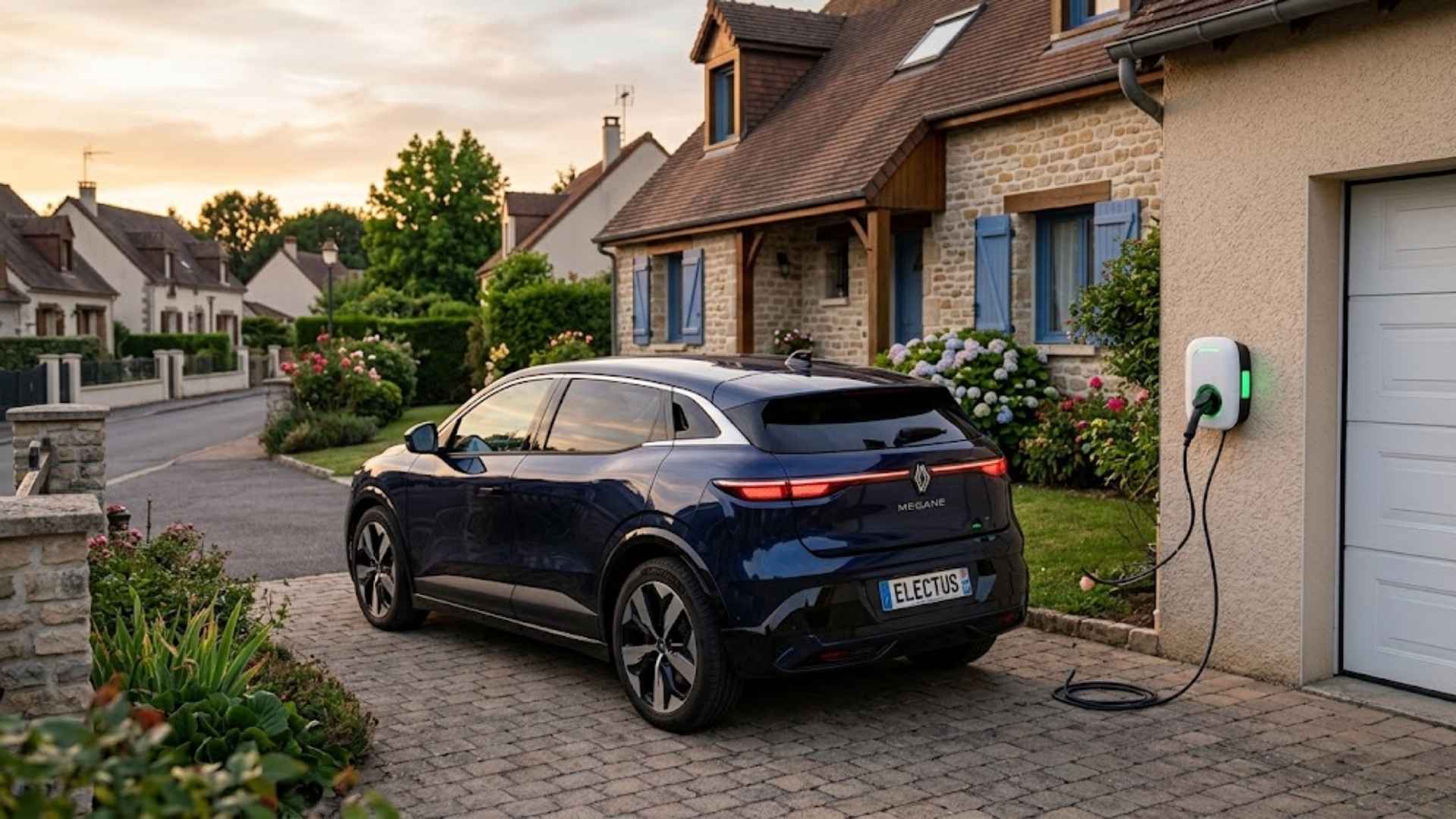
If you have a parking spot with access to electricity, home charging is generally the most practical and most affordable solution.
The car can be plugged in overnight to recover the energy used during the day. In most cases, you don’t need to fully recharge the battery after every trip.
Several types of equipment can be used:
- A standard household outlet
- A reinforced Green’Up-type outlet
- A 7.4 or 11 kW home charging station
The choice mainly depends on your daily mileage, your electrical setup, and the power your vehicle can accept. The shorter your daily trip, the less powerful a solution you’ll need: a standard outlet can be more than enough for occasional use.
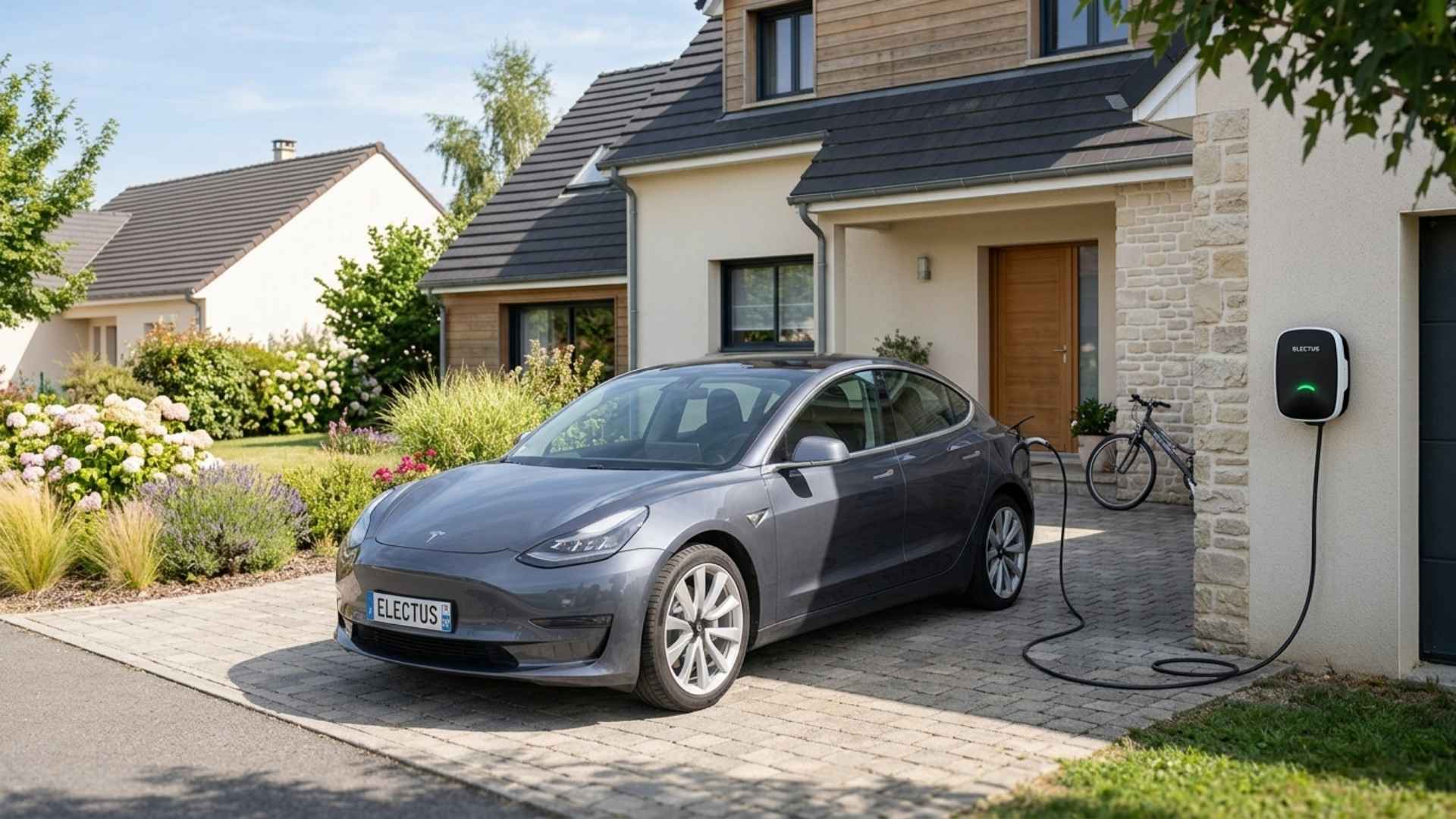 Charging
Everything you need to know about home charging options depending on your installation and needs.
Read the articleCharging at a public AC station
Public AC stations are mainly found in city centres, public car parks, near shops, at hotels, or in company car parks.
They let you charge while you work, run errands, or do something else. This is known as charging in “hidden time”.
These stations typically deliver between 7 and 22 kW of alternating current (AC). On most of them, you’ll need to bring your own Type 2 to Type 2 cable.
The power actually received still depends on your car’s onboard charger, so it’s normal not to always reach the maximum power displayed on the station.
To find a nearby AC station and check its real-time availability, the Electus app brings together all the information you need.
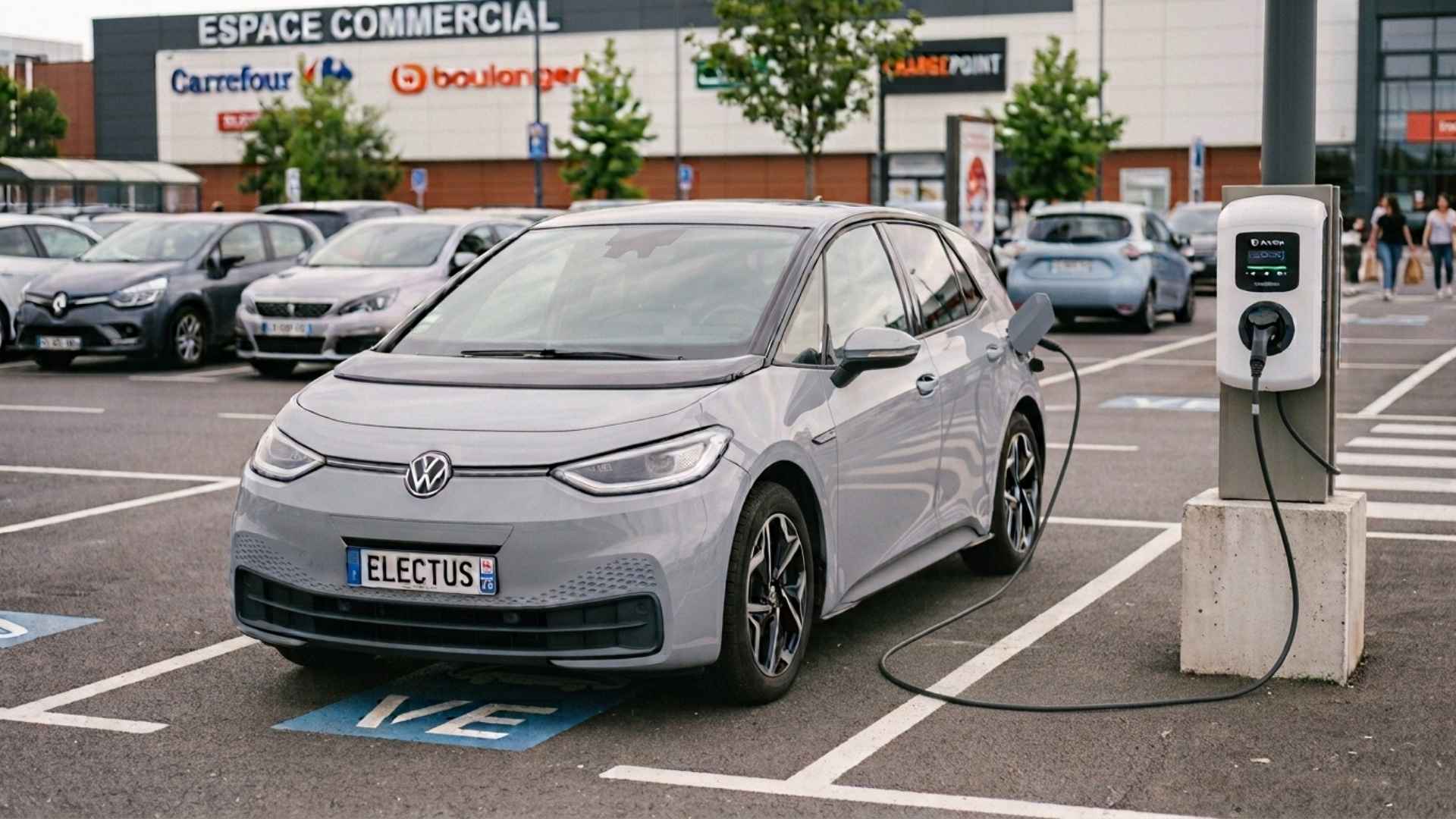 Charging
Learn how to charge at a public accelerated charging station, choose the right cable, start a session and control charging costs with Electus.
Read the articleCharging at a fast (DC) station
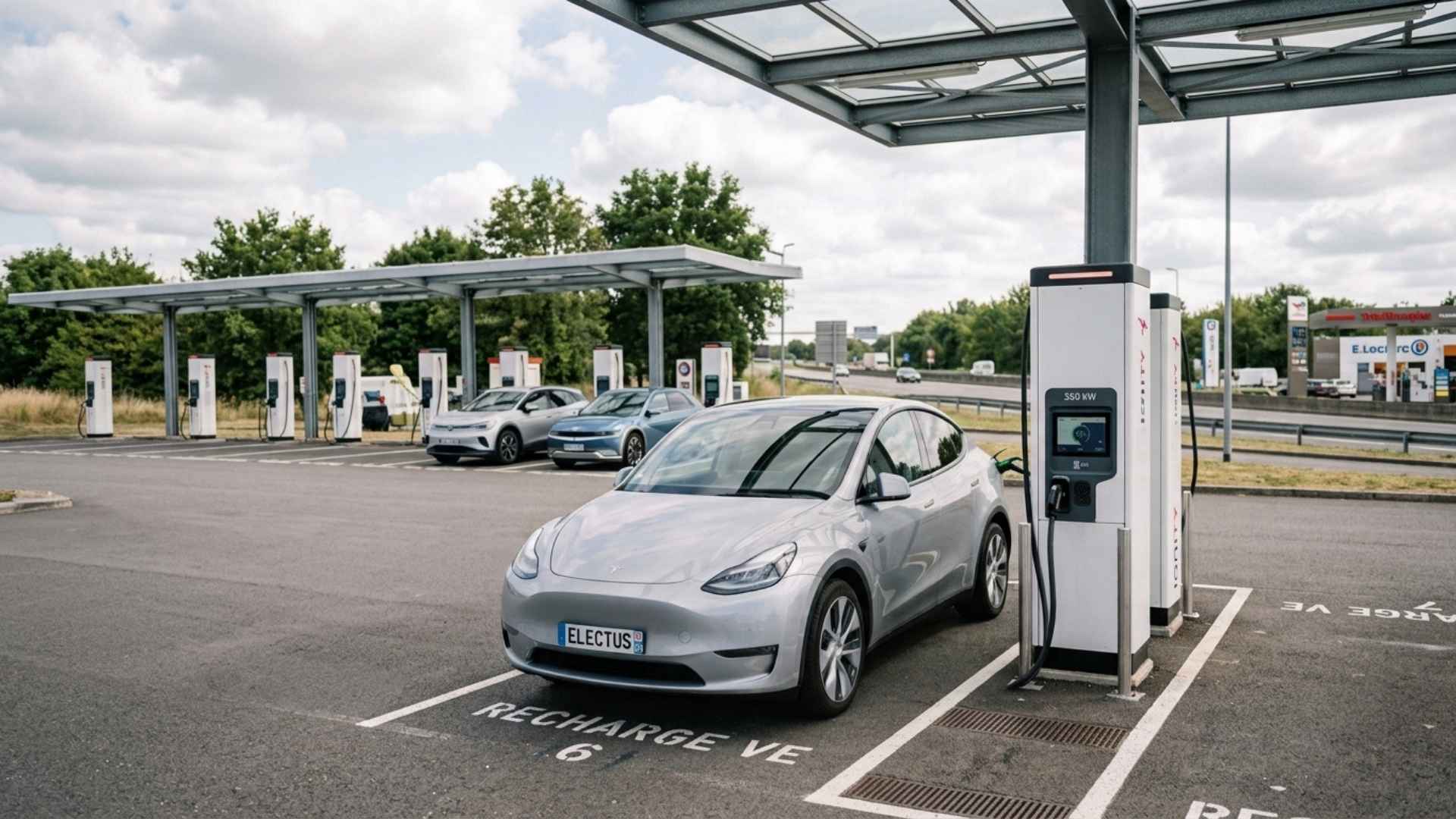
Fast stations let you recover a large amount of range in a short time. They’re especially useful on a trip, when you can’t leave the car plugged in for several hours.
Unlike AC stations, they use direct current. The cable is permanently attached to the station: you don’t need to bring your own.
Depending on your car, the station’s power output, and the battery level, charging from 10 to 80% can take around 20 minutes.
Charging power generally drops as the battery approaches 80%. It’s often faster to get back on the road rather than wait for a full charge.
To start your session smoothly at fast stations, consider ordering your charging badge in advance.
 Charging
Learn how to use a rapid charging station, choose the right connector, start charging and understand why charging power decreases after 80%.
Read the articleCharging an electric car on the motorway
On a long trip, charging stops need to be built into your route.
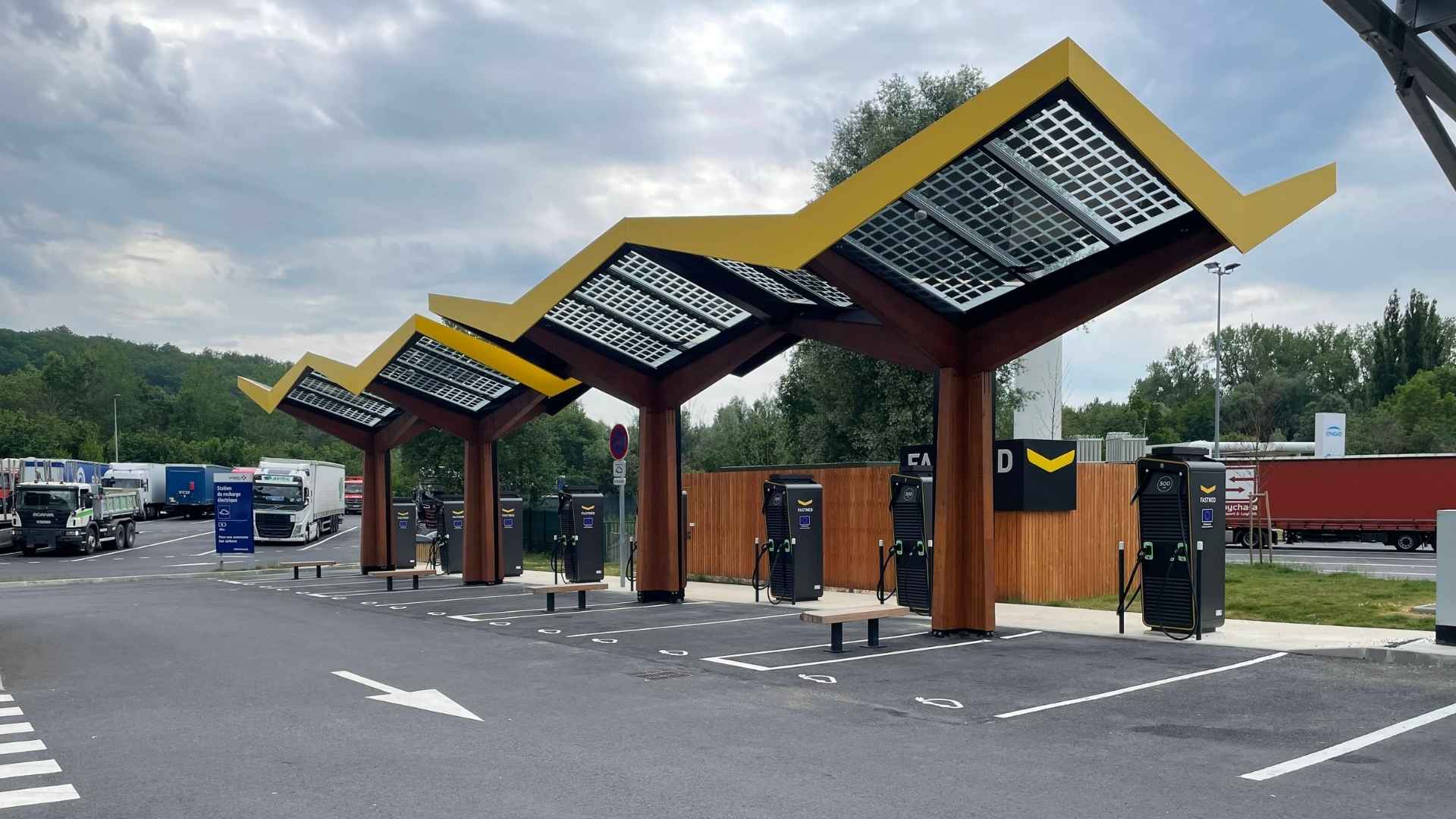
Motorway service areas always have fast-charging stations with multiple charge points. You can also leave the motorway briefly to use a station nearby, which is sometimes less crowded and cheaper.
Electus helps you plan your trips by adding charging stops to your route, along with an estimate of the total cost and travel time.
To minimise waiting time, it’s generally best to arrive at the station with a relatively low battery level and leave once you reach around 80%.
 Charging
How to use a fast charger on the motorway? Plugging in, payment, charging time and tips for long road trips in your electric car.
Read the articleWhich solution should you choose?
There’s no single right way to charge an electric car: it all depends on your daily routine. Home charging remains the most cost-effective solution for everyday use, AC stations are a great fit for your outings, and fast stations step in whenever you need to top up range quickly, whether on a trip or on the motorway.
With Electus, you have all the tools you need to charge with total peace of mind, wherever you are.