When you’re new to the world of electric vehicles, it’s hard to escape a wave of acronyms: AC, DC, kW, kWh, SOC, SOH, CCS, CHAdeMO… These terms show up on charging station screens, in vehicle manuals, and on charging apps, rarely explained. No need to worry: each one refers to something simple, and once the basics are in place, none of them should trip you up anymore.
This glossary follows the logical path of a charging session: starting with the current flowing through the cable, moving to the connector that carries it, then the power level that determines charging speed, the units shown on screen, the energy recovered while driving, and finally the players that make charging possible across France. By the end of this article, you should be able to read any charging station or spec sheet with confidence.
Types of Current: AC and DC
Before even talking about connectors, it helps to understand what actually flows through the cable — everything starts with the distinction between two types of current.
AC (alternating current) is what you find at home or on most public charging stations. It corresponds to slow to fast AC charging, generally with a power output between 1.8 kW and 22 kW. One key point: this current must be converted by the vehicle’s onboard charger before it can be stored in the battery, which mechanically limits its speed.
DC (direct current), on the other hand, is injected directly into the battery without conversion. It’s used exclusively on rapid charging stations, with power levels ranging from 22 kW to over 400 kW depending on the station and vehicle model.
This fundamental difference between the two currents explains why they don’t run through the same cables or plugs — which brings us to connectors.
Charging Connectors

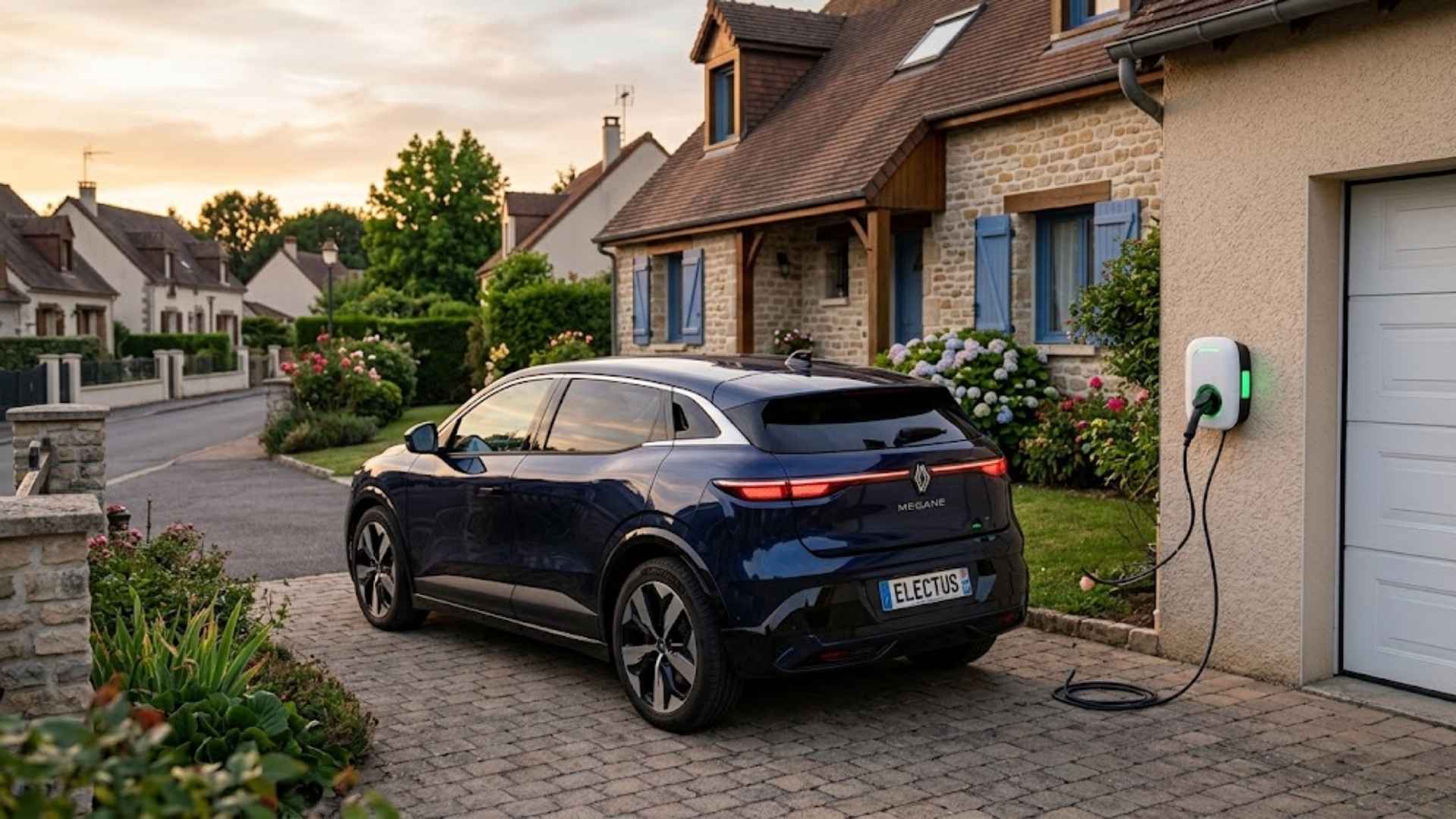
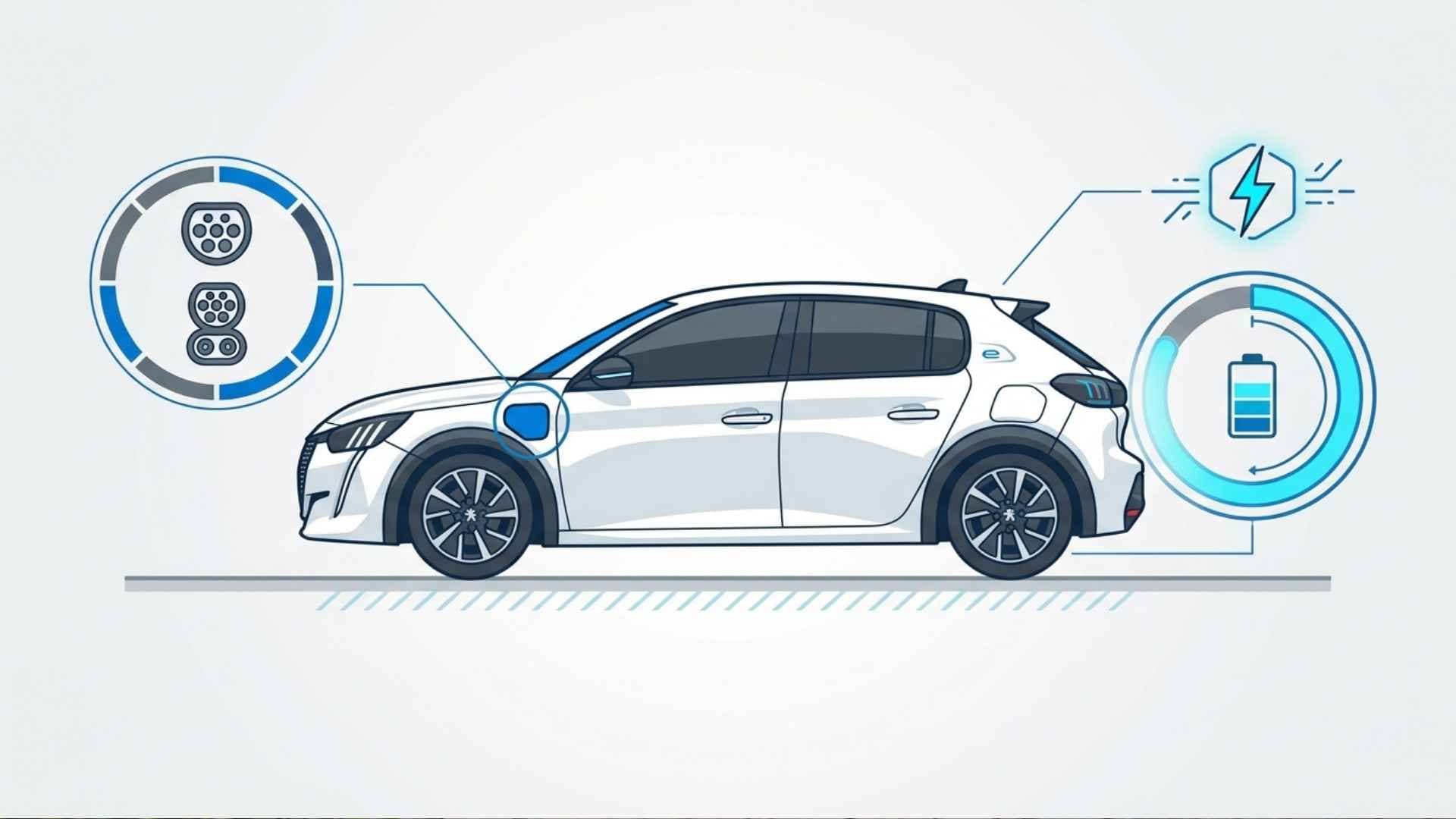
Type 2: the European standard for AC charging. Found on all slow and fast AC public stations, home wallboxes, and the cable supplied with nearly every vehicle sold in Europe. The cable is generally included as standard with the vehicle.

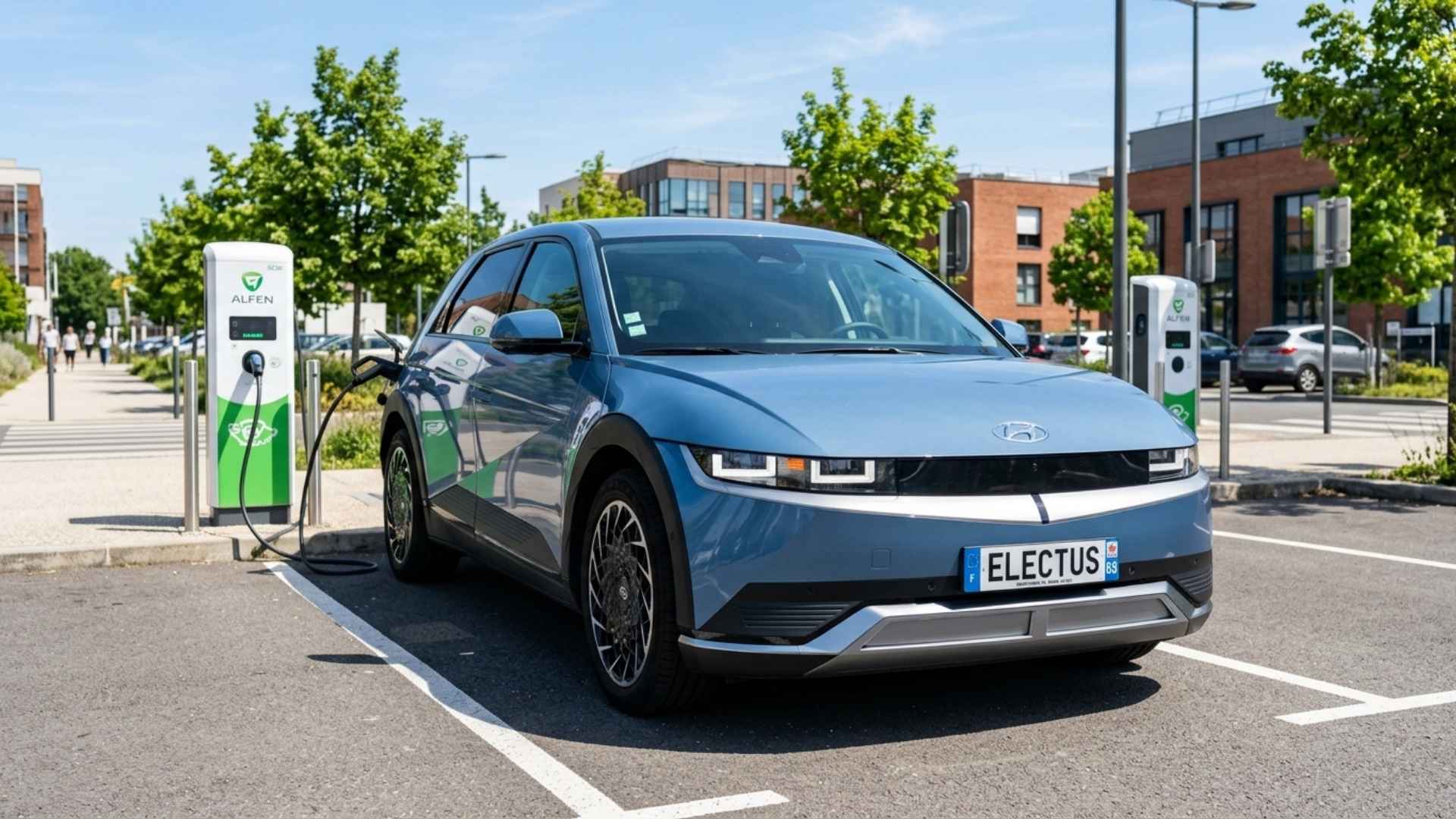
CCS (Combo): the connector dedicated to rapid DC charging. Found on the vast majority of rapid charging stations, it now equips nearly all recent electric vehicles. The cable is always attached to the station, never supplied with the vehicle.

CHAdeMO: an older rapid DC charging standard, mainly used on Asian vehicles like the Nissan Leaf. Gradually being replaced by CCS, it’s disappearing from newer models. As with CCS, the cable is built into the station.

Schuko: the standard household socket, the same one used for a vacuum cleaner or a lamp. It’s used with an occasional charging cable to plug in your vehicle from a regular outlet, as a backup option. The cable isn’t always included with the vehicle: depending on the manufacturer, it may come standard, be available as an option, or not be offered at all.
Two cables generally cover most situations in your trunk: a Type 2 cable for public and home stations, and an occasional charging cable for regular outlets as a backup.
Once the right cable is plugged into the right connector, the next question is how fast the charge will actually go — which comes down to power level.
Charging Power Levels
There are generally three main power tiers, which directly determine how long you’ll spend at the station.
Slow charging: power below 7 kW, typical of a home outlet or an entry-level wallbox.
Fast charging: power between 7 kW and 22 kW, still in AC, found on some public stations or three-phase wallboxes.
Rapid charging: any station running on DC is considered rapid, though “true” rapid charging usually starts at 50 kW.
As a reference, for a 60 kWh battery: slow charging at 7 kW takes roughly 8 to 9 hours for a full charge, fast charging at 22 kW around 3 hours, and rapid charging at 100 kW can take the battery from 20% to 80% in about thirty minutes.
These power levels appear directly on the station’s screen or in a charging app, alongside a few other indicators worth understanding.
Technical Indicators and Units
kW (kilowatt) measures power — essentially a rate, the speed at which energy is delivered by a station at a given moment.
kWh (kilowatt-hour) measures a quantity of energy, used to express a battery’s total capacity or the energy actually delivered during charging. Think of kW as the flow rate of a tap, and kWh as the total volume of water that has flowed.
SOC (State of Charge) shows the battery’s current charge level as a percentage — the electric equivalent of a fuel gauge.
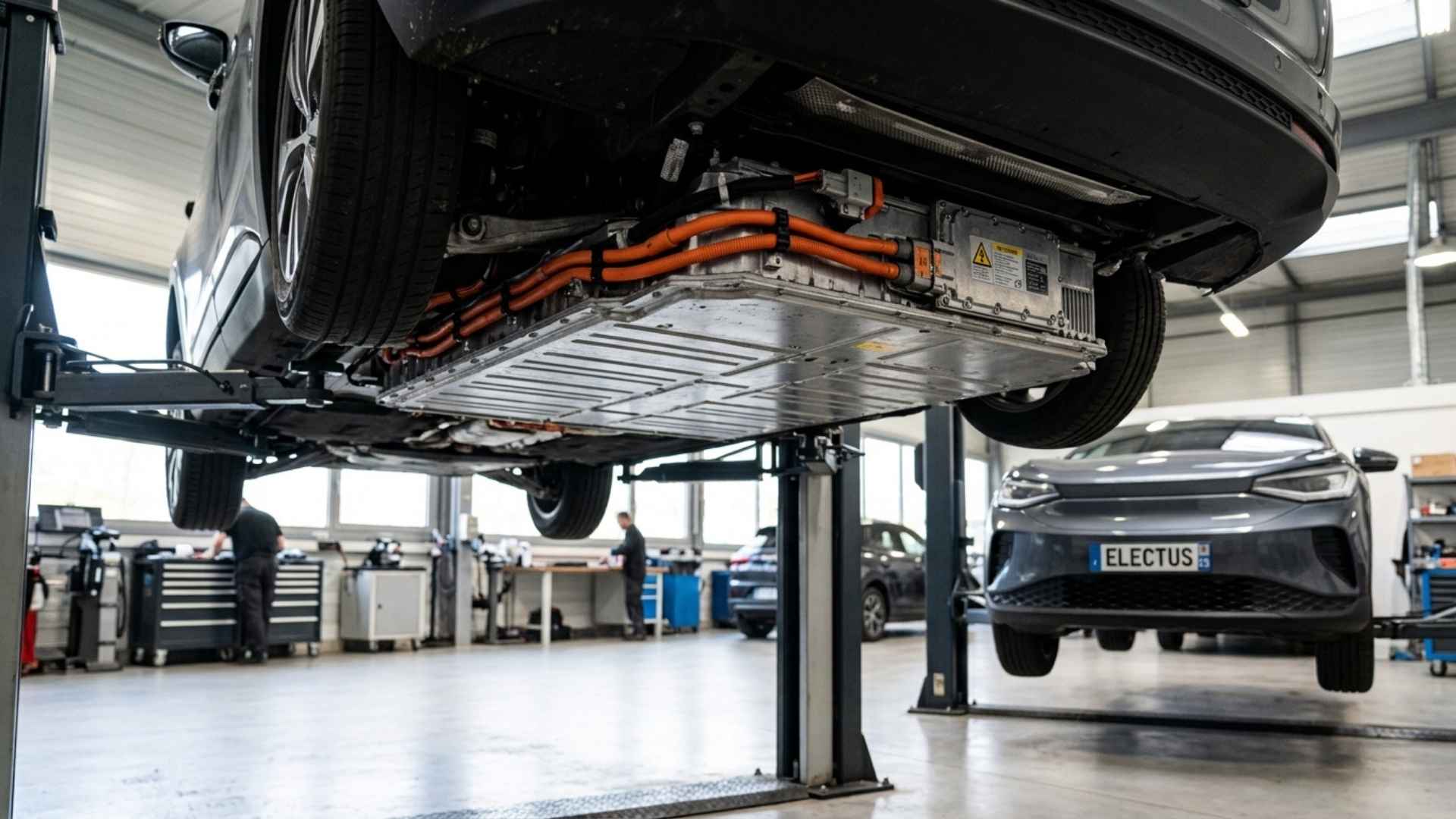
SOH (State of Health) reflects the battery’s overall condition: at 100%, it’s as good as new, and this figure gradually decreases with use and age. It’s a key indicator to keep an eye on over time.
 Car
CarUnderstand how EV battery capacity evolves over time and what impacts it.
Read the articleWLTP is the standardized protocol used to measure a vehicle’s theoretical range in laboratory conditions. Real-world range varies significantly depending on weather, driving style, and trip profile.
These figures capture the battery’s state at a given moment, but part of the energy used can also be recovered while driving, thanks to regenerative braking.
Regenerative Braking and One-Pedal Mode
Regenerative braking: simply lifting your foot off the accelerator slows the car down and recovers part of its kinetic energy, feeding it back into the battery. This deceleration typically works down to 5–10 km/h, below which normal braking is still needed to bring the vehicle to a complete stop.
One-pedal driving is a more advanced version that lets you slow all the way to a full stop without ever touching the brake pedal. Beyond the range benefit, it’s mainly a real driving comfort feature in the city, where acceleration and deceleration phases follow one another constantly.
Understanding the energy recovered while driving is useful day to day — but knowing where and how to charge anywhere in France, even far from home, is what really makes electric driving practical.
Roaming Terms and Charging Network Players
Roaming: the ability to charge at stations belonging to different networks without having to subscribe to each one individually.
CPO (Charge Point Operator): the operator that physically installs and runs the charging stations.
eMSP (e-Mobility Service Provider): the service provider that gives you access to those stations, typically through a charging badge or an app.
Charging badge: the card that lets you start a session at almost any public charging station in France, regardless of operator, without juggling multiple subscriptions or apps.
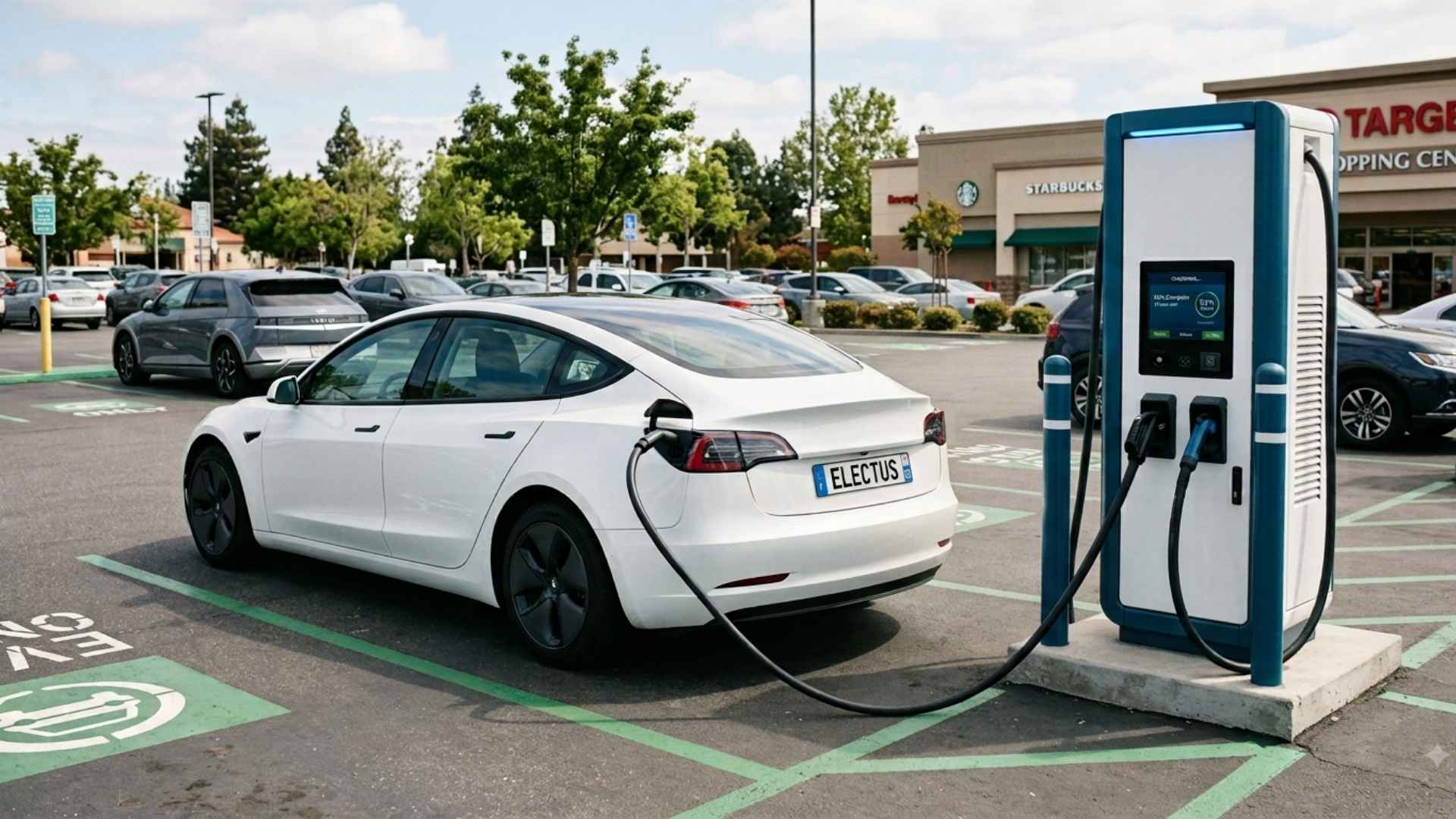 Charging
Everything you need to know about charging an EV at home or at public stations.
Read the articleIn Summary
From the current flowing through the cable to the badge that unlocks the station, through power levels, on-screen units, and the energy recovered while driving, all this vocabulary tells a single story: charging is becoming easier to understand and master. With these reference points in mind, no charging station screen or spec sheet should catch you off guard again.